Part 1 Test
The Part 1 (Theory Test) is considered the easiest of all the tests required to become a driving instructor. Interestingly, however, the pass rate for Part 1 is actually lower than the pass rate for the Part 2 test.
This is due to a number of reasons:
- Unlimited attempts: You can take the Part 1 test as many times as you like, whereas the Part 2 and Part 3 tests allow only three attempts each.
- Training company practices: Some large training establishments profit when you fail the Part 1 test and eventually give up. These companies usually ask for full payment up front, and if you quit, they keep your money. If you pass Part 1, they must then fund your Part 2 and Part 3 training. Often, these companies don’t even have a trainer in your area. Once you pass Part 1, they may subcontract you to an external trainer with whom they have little or no relationship. They also often include strict terms stating that you must pass Part 1 within a certain timeframe or risk losing your training fees. Be sure to read the small print to avoid this happening to you.
- Language barriers: For many PDI applicants, English is not their first language. They may be competent drivers, but their reading skills may not yet be at the level required. As a result, they may fail Part 1 simply because they do not fully understand all of the questions.
- Using the wrong study materials: Many PDIs choose to prepare for Part 1 without a training provider. Unfortunately, they often use incorrect training resources and may fail several times because they are studying the wrong material, such as revising learner theory questions instead of ADI theory questions, which are very different. This is a common and costly mistake.
- Hazard perception difficulties: Some PDIs are strong with the theory questions but fail the hazard perception section because they haven’t received the correct guidance or appropriate training resources to practise effectively.
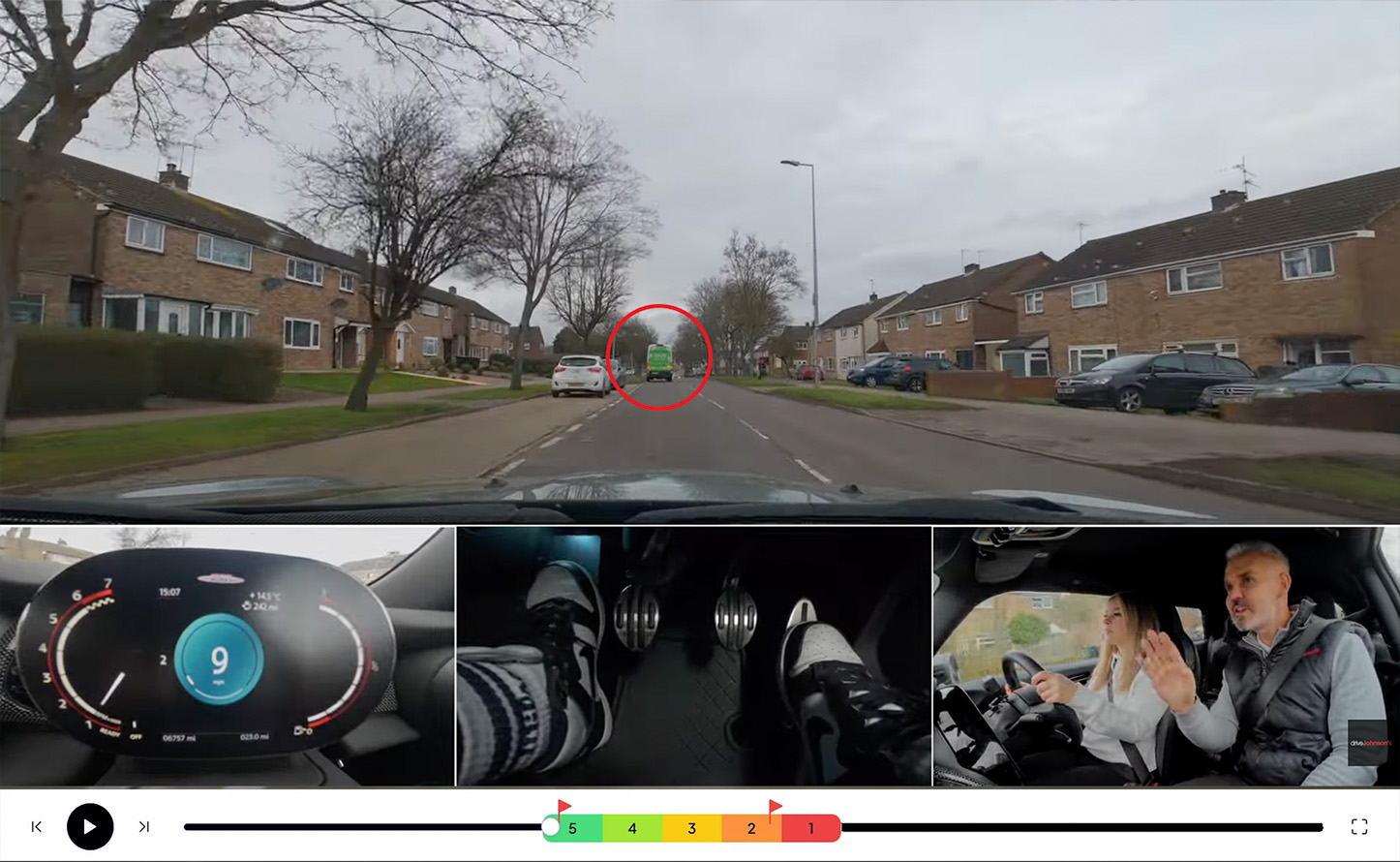
When you sign up to driveJohnson’s instructor training you will receive access to our training zone which will help you with you with your Part 1, 2 and 3 training.
Part 1 Pass Rate
| Year | Conducted | Passed | Percentage |
|---|---|---|---|
| 2021 to 2022 | 17,500 | 7,907 | 45.2 |
| 2022 to 2023 | 19,425 | 7,413 | 38.2 |
| 2024 to 2025 | 29,839 | 11,188 | 37.5 |
| 2025 to 2026 | 15,232 | 5,698 | 37.4 |
At driveJohnson’s, you will receive support with your Part 1 training from the moment you sign up. We will give you access to our latest theory training software, along with a range of PDFs containing the most common tricky questions that often catch PDIs out.
If you find yourself struggling, extra help is available from one of our trainers via Zoom, or you are welcome to visit our office for additional support.
Part 2 Test
The Part 2 test is considered the second-easiest test. As you can see, the number of Part 2 tests conducted each year is almost half the number of Part 1 tests.
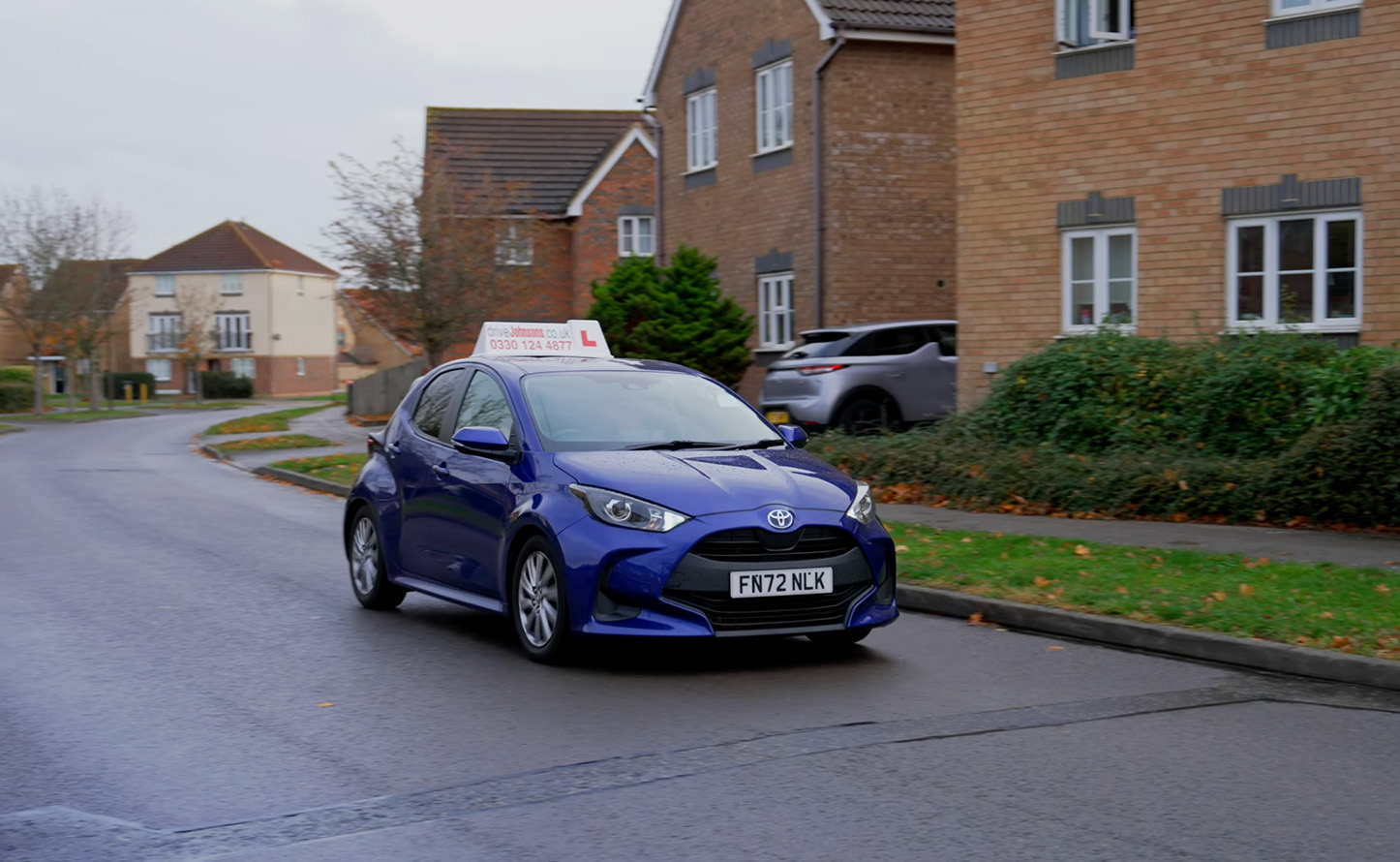
Here are some of the reasons why a PDI may fail the Part 2 test:
- Incorrect or insufficient training: Many driving instructors offer Part 2 training, but they lack the experience or knowledge required to help someone successfully pass the test.
- Taking the test in an unfamiliar area: Many PDIs choose to take the Part 2 test in an area they do not know. This is always a risk, as you have no idea what types of roads or situations you will encounter. Taking the test in an area you are familiar with will almost always be easier than taking it somewhere unfamiliar. At driveJohnson’s, we recommend that PDIs take the test in their local area where possible, subject to Part 2 waiting times.
- Underestimating the difficulty: Many PDIs mistakenly assume that the Part 2 test is simply an extended learner test. This is not the case: the standard required is much higher. While a learner rarely fails for accumulating too many faults in the same area, a PDI can fail for just three driver faults in the same category, such as gears or mirrors. You must be able to drive for approximately 60 minutes while committing no more than six driver faults. Reaching this standard takes time and practice; it doesn’t happen at the click of a finger.
Part 2 Pass Rate
| Year | Conducted | Passed | Percentage |
|---|---|---|---|
| 2021 to 2022 | 9,566 | 5,701 | 59.6 |
| 2022 to 2023 | 9,357 | 5,338 | 57.0 |
| 2023 to 2024 | 10,499 | 5,542 | 52.8 |
| 2024 to 2025 | 16,004 | 8,572 | 53.6 |
| 2025 to 2026 | 7,261 | 4,005 | 55.2 |
Part 3 Test
The Part 3 test is considered the hardest of all the qualifying tests, and almost everyone training to become a driving instructor agrees with this. Even with a good trainer supporting you, it is still possible to fail the Part 3 test for many reasons.
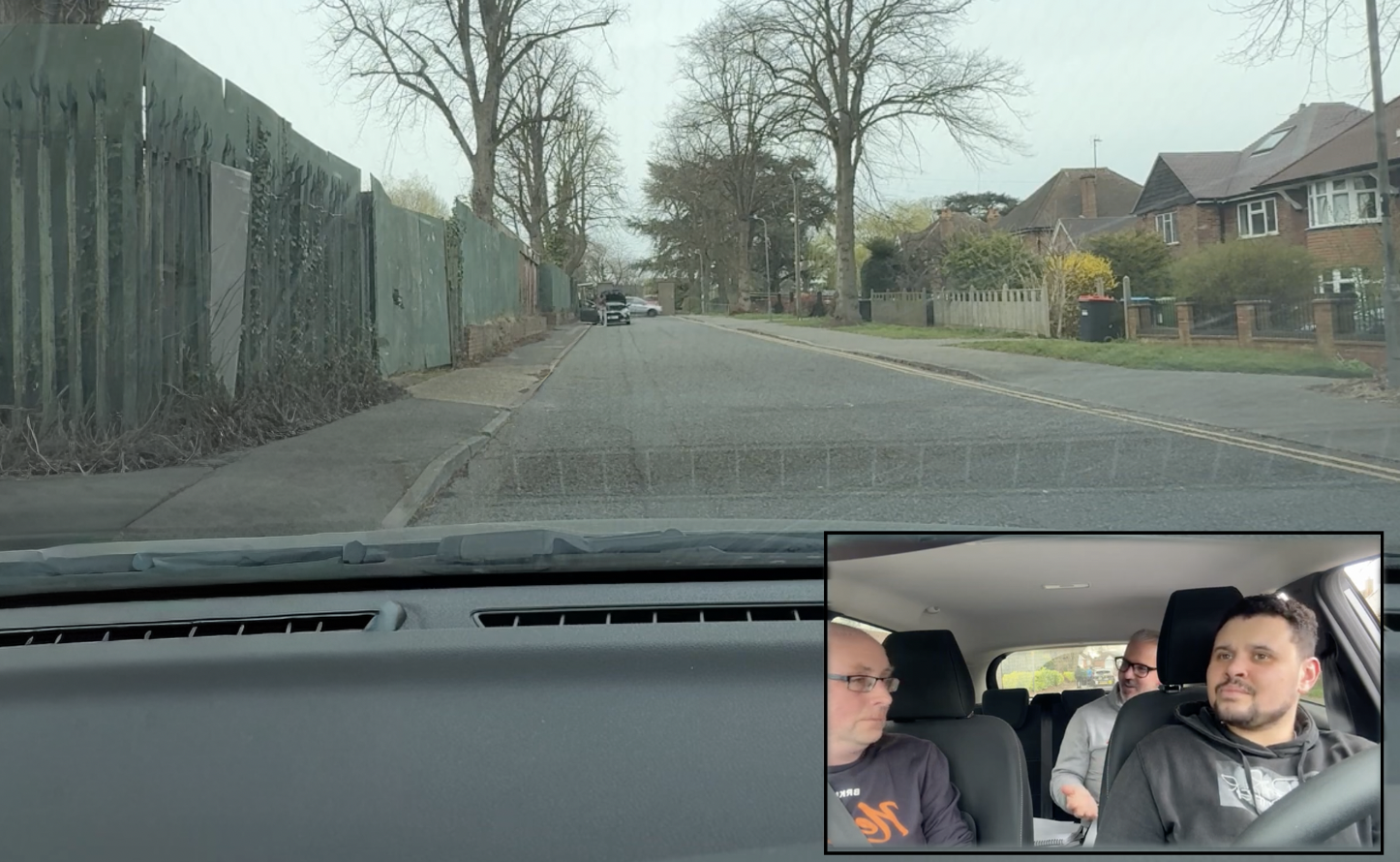
Anthony Johnson sitting in the back of a PDI lesson, giving feedback. This type of training is often neglected by PDIs as they don’t feel comfortable with their trainer observing their teaching.
Here are some of the common reasons why PDIs fail the Part 3 test:
- Incorrect or insufficient training. Even if you are feeling confident going into the test, you need to understand what the examiner is looking for and how to deliver it. You can make unnecessary mistakes without the correct training.
- Lack of high-quality Part 3 practice with a trainer observing lessons: Many PDIs go onto a trainee licence and begin teaching their learners differently from how they were trained, gradually slipping into bad habits. Often, they don’t have a trainer observing their lessons regularly (every 1–2 weeks). The longer a PDI teaches without professional observation, the further their teaching style drifts away from what is required to pass the Part 3 test.
- Not understanding what the DVSA examiner is looking for: Many trainers are good at teaching the basics of how to train learners, but they lack the experience and insight into what examiners specifically want to see on the day. Conducting a two-hour lesson from a learner’s home is very different from delivering a focused 45-minute lesson from a test centre with an examiner in the back observing.
- Weak risk management: This is one of the most common reasons for failing the Part 3 test. Using the dual controls to prevent an accident is one thing, but recognising rising risk levels early — and preventing them from escalating to the point where physical or verbal intervention is needed — is far more challenging.
- Not adapting the lesson: If you pass the risk management section of the test (which requires a minimum score of 8 out of 15), the next area on the marking sheet is: Was the lesson plan adapted, when appropriate, to help the pupil work towards their learning goals?
Many PDIs try to play it safe in order to pass the risk management section, but then fail because the lesson appears too easy and, in the examiner’s opinion, the pupil was not challenged enough.
| Year | Conducted | Passed | Percentage |
|---|---|---|---|
| 2021 to 2022 | 6,615 | 2,337 | 35.3 |
| 2022 to 2023 | 7,887 | 2,864 | 36.3 |
| 2023 to 2024 | 8,609 | 2,945 | 34.2 |
| 2024 to 2025 | 11,749 | 3,395 | 28.9 |
| 2025 to 2026 | 6,583 | 1,899 | 28.8 |