Keep stalling when you move off? Clutch control can feel like the hardest part of learning to drive, especially when the car jerks or cuts out just as things start to feel right.
The truth is, almost every learner goes through this stage. But, despite how it may seem at first, mastering clutch control isn’t about becoming quick at a process. Once you slow everything down and learn what to feel for, that’s when it falls into place.
At driveJohnson’s, we help learners get comfortable with clutch control quickly, because we know it’s one of the biggest early challenges. Below are some of our top tips on learning clutch control to help you.
- What is clutch control?
- How does a car clutch work?
- Use of the clutch
- How to learn clutch control quickly
- Clutch control on a hill
- How to practice clutch control without a car
- Clutch control in your driving test
- Clutch control tips
What is clutch control?
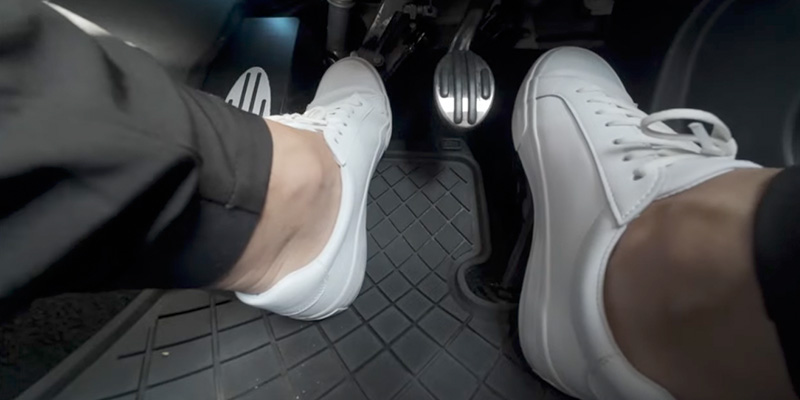
Clutch control is when you can use the clutch pedal to control a car’s speed when you are travelling at a slower pace, such as when moving off, stopping, or driving slowly in traffic. You need to find the biting point and carefully balance the clutch with the accelerator so that the car moves smoothly without stalling.
The main disadvantage of poor clutch control, other than lack of control, is that the clutch could end up burning out more quickly, leading to a replacement that can cost several hundred pounds for parts and fitting. Learning good clutch habits early on can save you both stress and money later.
When you start your driving lessons in Sheffield, Stevenage and elsewhere, clutch control can be one of the trickiest skills to get used to. Most learners need to practice it many times before it starts to feel natural, so it’s worth focusing on it early and practising it regularly with your instructor.
How does a car clutch work?
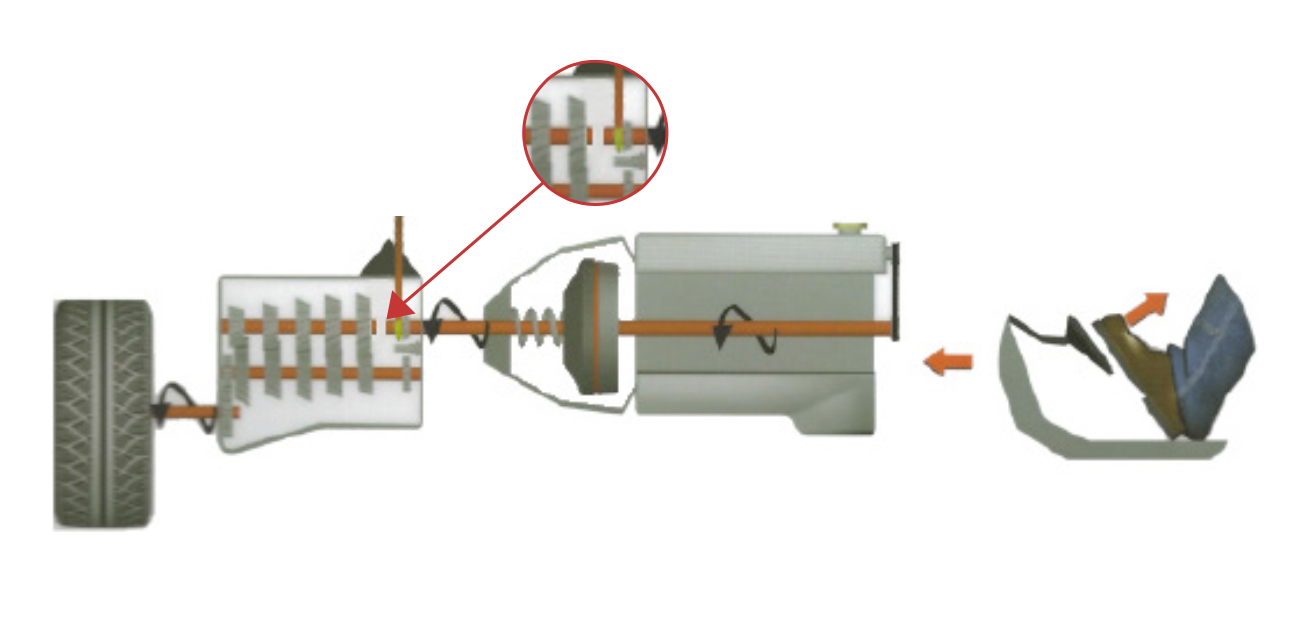
The clutch is made up of parts, including a flywheel, a clutch plate (friction disc) and a pressure plate. These components work together to connect and disconnect the engine from the wheels.
When the clutch pedal is pressed all the way down, these parts separate, which disconnects the engine from the drivetrain. This means no engine power is sent to the wheels (see the video below), and you can change gears or stop the car without stalling.
When you start to release the clutch pedal, the components start to come back together. At a certain point, they begin to grip each other and start transferring power. This is known as the biting point.
As you continue to release the clutch, the grip increases, and you will notice more power is transferred through the drivetrain. Once the clutch pedal is released, the engine is fully connected to the drivetrain, and the car will move forward normally.
At driveJohnson’s, instructors spend time helping learners feel the biting point rather than just memorising it. This is because once you learn to feel it consistently, it becomes much easier to find it and control when power goes to the wheels.
Use of the clutch
The clutch has a key part to play in making a car drive smoothly and safely. Below are the main ways the clutch is used:
- To move from one gear to another while driving.
- When slowing down to very low speeds and stopping, to prevent the engine from stalling.
- To allow slow, controlled movement during manoeuvres by holding it at or near the biting point.
Learning to use the clutch correctly is essential for smooth driving. Once you become familiar with it, it quickly becomes second nature.
How to learn clutch control quickly
To learn clutch control quickly, it helps to slow everything down and focus on feel rather than rushing the process. Follow these steps:
- Press the clutch fully down and select first gear.
- Slowly lift the clutch until you feel the biting point.
- Pause there and keep your foot steady.
- Gently apply a small amount of accelerator.
- As the car begins to move, keep the clutch steady and then continue lifting it gradually.
- Fully release the clutch once you’re moving smoothly.
Take your time with this. A common mistake learners make is to try to do all of the above steps too quickly. The smoother and slower you are, the more control you’ll have.
If you are taking driving lessons in Leeds, Edinburgh, or elsewhere with our driving instructors, don’t be afraid to ask to repeat this process again if you are unhappy with how you handled it the first time. Repetition builds muscle memory, which is why your instructor will teach you how to demonstrate excellent clutch control in many driving situations before your test.
Clutch control on a hill
Practising a hill start is a great way of mastering moving off in a car. It teaches you how to control the car under pressure and prevents you from rolling backwards. It’s one of the best ways to build confidence with clutch control, especially on steeper roads. Follow these steps:
- First, find a road on a fairly steep hill in a quiet area (for example, if you have your driving lessons in Bedford, your instructor may take you to Brickhill or Putnoe to practice clutch control).
- Secure the car with the handbrake.
- Press the clutch down and put the car into 1st gear.
- Slightly press down on the accelerator and use the clutch to find the biting point. You will hear the car get louder, and it will try to move forward when the bite has been found.
- Complete your 360 observations, including mirrors and blind spots.
- Release the handbrake.
- Move off smoothly.
If the car rolls back, don’t panic. That’s completely normal while learning. With practice, your timing will improve, and hill starts will feel much more controlled. A good instructor will often spend extra time on hills because once you master this, your overall clutch control will quickly improve.
How to practice clutch control without a car
Even when you’re not in a car, there are ways to build your understanding and confidence.
- Visualisation: Picture yourself moving off smoothly, step by step.
- Foot control practice: Practice using slow, controlled movements with your foot to mimic lifting the clutch.
- Watch real driving examples: Watching how others manage clutch control can help you to understand the timings involved.
Of course, nothing replaces getting behind the wheel and practising clutch control yourself in real life, but these small habits can help you progress faster in your driving lessons.
Clutch control in your driving test
Clutch control plays a big role in your driving test, even though it isn’t marked as a separate skill. Examiners will be watching out for:
- Smooth moving off
- Good control at low speeds
- No stalling or loss of control
- Confidence in traffic and junctions
Stalling once isn’t an automatic fail, as long as you recover safely and maintain control of the vehicle.
Clutch control becomes especially important during key parts of the test, such as moving off from the side of the road, dealing with stop-start traffic, performing hill starts, and completing manoeuvres like parallel parking. These are the moments where smooth, controlled use of the clutch really stands out.
Strong clutch control helps everything feel more composed and consistent, which creates a positive overall impression on your examiner.
Clutch control tips
Here are our top clutch control tips:
- Always lift the clutch slowly to find the biting point
- Accelerate gently to avoid stalling
- Practise clutch control in quiet areas until you feel confident
- Stay calm if you stall
- Use smooth, controlled movements
When you are in a safe, quiet area with the engine running, you can practise holding the biting point and making small, controlled adjustments with the clutch to understand how it responds. Keep the accelerator steady to keep the car’s speed as slow as possible. If the car slows down more than you would like, raise the pedal slightly to increase the speed. By doing this, you can practice finding the biting point and controlling the clutch.
If you’re struggling, remember that clutch control can be one of the most difficult parts of learning to drive. Once it clicks, though, driving will become much easier and far more enjoyable.

Remember, practice makes perfect!
Mastering clutch control takes time and practice, so if you find yourself struggling with it, don’t worry. Many learners find that clutch control takes repetition before it suddenly becomes simple.
Working with a qualified instructor can really speed this process up. Across the UK, our driving instructors in Huddersfield, Cardiff, and other places invest time in helping their pupils get to grips with this skill so that it becomes easy to master rather than a sticking point. If you’d like this kind of structured support, do get in touch. With the right guidance, you’ll find clutch control becomes much easier and far quicker than trying to figure it out alone.

Written by Anthony Johnson
Grade A - 51/51
ORDIT Registered Trainer