Objectives: You should be able to identify a roundabout ahead and understand the rules of priority using the MSPSL routine on the approach. You should be able to proceed ahead, to the left, and to the right, signalling and positioning correctly on the approach to and through the roundabout.
Approaching a large roundabout with multiple lanes and exits, sometimes we have all wondered, “How do I deal with this?” It can feel overwhelming, especially when traffic is heavy and you are not sure where to go. However, once you know the rules, you can tackle any big roundabout with confidence. Keep reading to learn how to approach, enter, and exit a roundabout like a pro!
- How to enter a roundabout
- Lane discipline on roundabouts
- How to exit a roundabout correctly
- Choosing the correct lane for your exit
- New Highway Code rules for roundabouts
- Top test tips for large roundabouts

Mastering large roundabout rules
At driveJohnson’s, we teach thousands of learner drivers to master navigating large roundabouts safely every year. With a driving school in Milton Keynes, a place famous for its roundabouts, we see many learner drivers who are nervous about how to tackle roundabouts with multiple lanes. The step-by-step process outlined below is the one we teach, and it will help you, whatever roundabout you may face.
How to enter a roundabout
Entering a roundabout too quickly can confuse other drivers or even cause a dangerous accident. To keep you and other road users safe, as you approach a roundabout always check, plan, and clearly communicate your intentions.
Check the road signs and markings
On the approach to a roundabout, it is important to look out for road signs and road markings early. It can be very tricky trying to change lanes at short notice, so get into the appropriate lane early.
Then you will need to carry out your MSPSL routine as follows:
Mirrors and signal
Hopefully, you should know which mirrors and signals you require for turning left and right by now. You will just need to check your interior mirror when going ahead at a roundabout.
Position
When entering the roundabout, get into the right lane as early as possible. It’s important to stay in this lane when you’re on the roundabout, too. See the blue, red, and white cars in the diagram for examples of correct positioning.
Sometimes you will see road markings that say you can use the left-hand lane and the middle lane on a 3-lane roundabout to go ahead. Unless you are overtaking, use the lane to the left if possible.
Speed
As a general rule, you should slow your car down to 20-25mph on the approach to a big roundabout. Even if the roundabout is really clear, you wouldn’t want to go any faster, as it could affect your position, especially when going onto the roundabout.

Furthermore, if the roundabout is clear, you would normally select 3rd gear and, if it’s looking busy, then slow down a bit more and go into 2nd gear. If you know you will have to stop, then you can wait until you get closer to the roundabout and then go into 1st gear.
Looking
Remember, your danger comes from the right but also ahead. Look out for anyone hugging the roundabout – see the 3 o’clock position on the roundabout diagram above.
Watch out for vehicles on the roundabout that may not be signalling. It’s better to slow down a little bit more earlier and get another check in. From this, you can then make a decision to go or hold back. Try to avoid being hesitant by checking all around you regularly, and keep looking ahead to position your car. Also, check that the car in front has left the roundabout before you decide to go.

Lane discipline on roundabouts
To navigate a large roundabout safely and efficiently, you must maintain good lane discipline (i.e., be in the correct lane on the roundabout at all times for how you want to get across it). This will make sure that traffic keeps moving, stops you and other drivers getting confused, and minimises the chances of accidents happening on the roundabout. This applies to both large roundabouts and mini roundabouts, so if you are tackling the famous Magic Roundabout on your driving lessons in Hemel Hempstead, keep lane discipline in mind.
To make sure you maintain good lane discipline, always do the following:
- Plan ahead as you approach the roundabout: observe the signs and road markings as explained above, before you get to the roundabout, to work out which lane you need to be in to get to the correct exit.
- Choose the correct lane: select your lane early and get into it as soon as possible. Don’t change lanes suddenly at the last minute.
- Cross the roundabout: once you are on the roundabout, stay in your lane until you are ready to exit, and always give way to vehicles already on the roundabout coming from your left.
- Exit the roundabout safely.
How to exit a roundabout correctly
When exiting a roundabout, you will want to let other users know that you intend to leave in advance to reduce the risk of congestion or collisions.
It is important to let other road users who are on and approaching the roundabout know when you are coming off, so try to apply your signal at the right time. Signal your intention to leave as you pass the exit before the one you intend to get off at. Look at the blue car in the diagram above, which is going ahead. It is coming off at the 2nd exit, so you should put your signal on just as you have passed the first exit.
Always check your blind spots as well as your mirrors to ensure it’s safe to turn into your exit lane. Keep maintaining good lane discipline as you leave the roundabout; do not cut across lanes, as this risks cutting someone off behind you.
Once you have turned onto the exit lane of the roundabout, cancel your signal and continue driving normally, safely increasing your speed up to the correct speed for the road you are now on if this is a faster road.
Choosing the correct lane for your exit
Choosing the correct lane to take across a large roundabout is very important as it will mean a smoother, safer journey for you and others. However, especially with some larger roundabouts with multiple exits, it can be confusing, even for more experienced drivers.
Roundabouts can vary, but there are some general principles that apply, which, when memorised, can help you know which lane to be in. We have summarised these below.
To note: these rules are specific to the UK, where there is left-hand traffic.
2 lane roundabout rules in the UK
If you are turning left or going ahead, then you will need to use the left-hand lane, unless road markings or signs tell you otherwise. Use the right-hand lane for turning right. Sometimes you can use the right-hand lane to overtake and go ahead. You must make sure there are 2 lanes coming off the roundabout, though.
3 lane roundabout rules in the UK
If you are going left, you should use the left-hand lane. Use the right-hand lane for going right. If you are going ahead, you should use the middle lane, unless road markings tell you otherwise.
4 lane roundabout rules in the UK
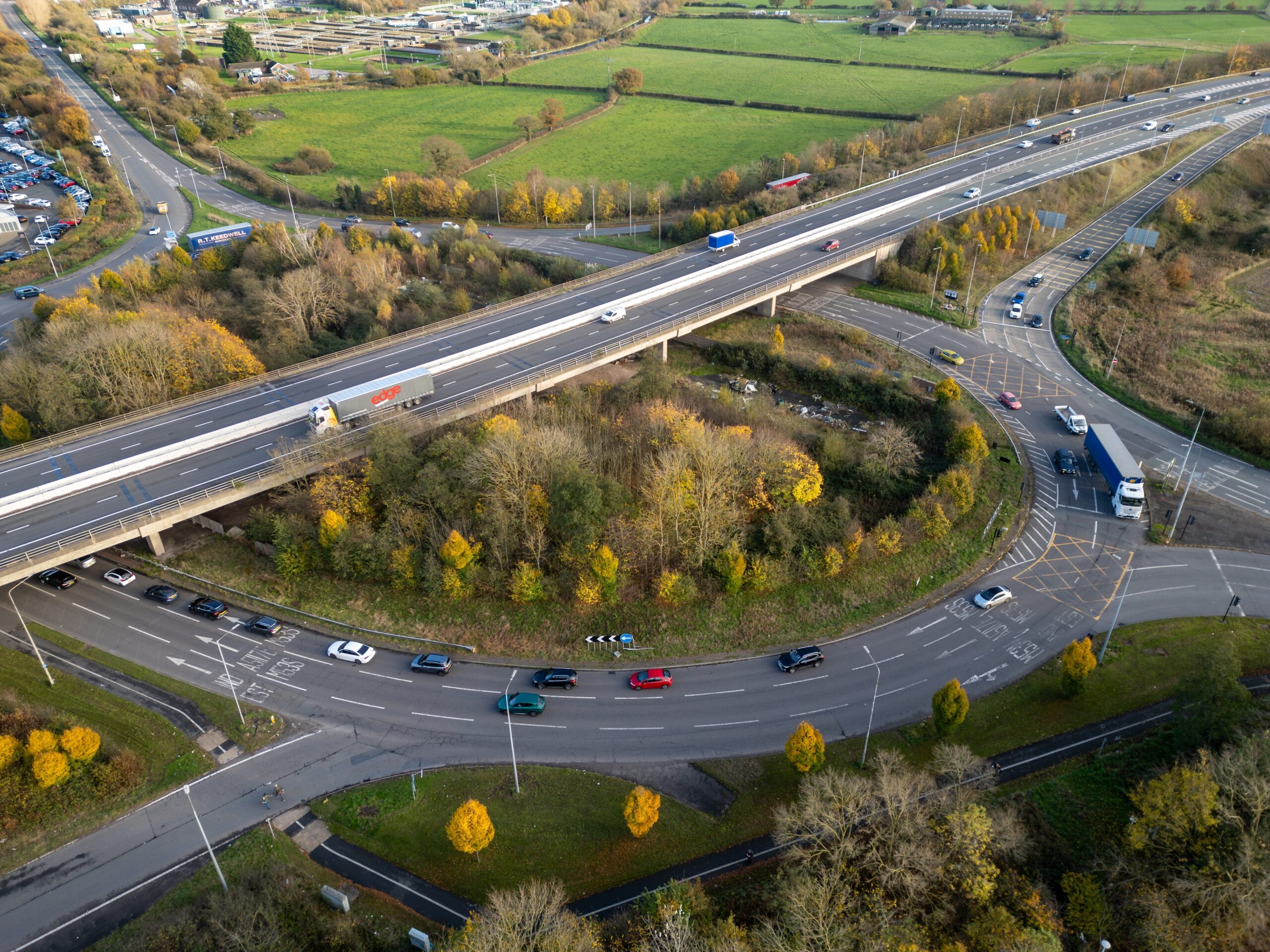
If you are turning left (taking the first exit), use the leftmost lane. If you are going straight ahead, use one of the middle lanes: the correct one should be clearly indicated by the signs and perhaps also by writing/arrows on the road itself. If you plan to turn right or make a U-turn, choose the right-most lane.
New Highway Code rules for roundabouts
In 2022, the Highway Code was updated to make roundabouts safer for pedestrians and cyclists. The new highway code rules brought in new roundabout rules and introduced a hierarchy of road users, with those most vulnerable to being seriously hurt during an accident given priority on the road.
As a driver, under these updated rules, you must not try to overtake a cyclist on a roundabout, and you must allow cyclists to go across your path as they cross the roundabout. They have priority over you.
People riding bicycles, horses, or in horse-drawn vehicles can now also choose to stay in the left-hand lane of a roundabout all the way across it, even if they intend to turn right across the roundabout. Please bear in mind that this is not the case for cars – you will still need to choose the correct lane for the exit that you wish to take.
Top test tips for large roundabouts
If you take your driving lessons in London, you will come across several complicated roundabouts. The best way to tackle complicated roundabouts is to check your mirrors and come off the gas a bit earlier, as this will give you more thinking time. When approaching new and complicated spiral roundabouts for the first time, you want to find out which lane you need to be in early, so look out for road signs and markings.
You also want to know where the exit you need off the roundabout is. If you look ahead early enough, you can gauge how other vehicles are dealing with the roundabout, which should help a little on the approach, and knowing what to do.
Final thoughts on how to tackle big roundabouts
By practicing and keeping a calm mindset, even the most complicated roundabouts will start to feel manageable. Just remember to stay alert, plan ahead, signal your intentions, and keep to your lane. Each time you conquer a roundabout, your confidence will grow, and your skills will improve, so don’t let large roundabouts put you off getting where you need to go.

Written by Anthony Johnson
Grade A - 51/51
ORDIT Registered Trainer