The Show Me, Tell Me questions may be a small part of your driving test, but answer them wrong and it could impact your result. From checking your brakes to operating your car headlights, the questions are designed to show that you know how to stay safe and legal on the road, and the answers will help you for the rest of your driving journey, not just on your test.
In this guide, we will cover what the Show Me, Tell Me questions are, what the examiners are looking for, and give insider tips on how to feel confident answering them on the day.

- What are the Show Me, Tell Me driving test questions?
- How to learn Show Me, Tell Me questions
- Show Me, Tell Me questions videos from the DVSA
- Common mistakes for Show Me questions
- Top tips for all the Show Me questions
- Common mistakes for Tell Me questions
- Top tips for all the Tell Me questions
- Frequently asked questions
What are the Show Me, Tell Me driving test questions?
On your driving test, your DVSA examiner will ask you one Tell Me question at the beginning, before the car is moving, and one Show Me question during the test while the car is moving.
A Show Me question requires a demonstration of how you would operate one of the ancillary controls on your car. For example: “When it is safe to do so, show me how you would check that the horn is working properly.”
A Tell Me question just requires an explanation.
How to learn Show Me, Tell Me questions
It is very important to know the Show Me, Tell Me questions and answers ahead of your test so that you can answer them correctly on the day. The best way to do this is to practice them as much as possible. Go through them as you would on your test rather than just read them to yourself. The more you do this, the less likely nerves will make you forget the answers on the day.
At driveJohnson’s driving school, we take everything about preparing you for your driving test seriously, so we have provided a printable Show Me, Tell Me question sheet so you can practice on your own as well as with your instructor.
Download 'Show Me, Tell Me' Questions Click here to download and print the ‘Show Me, Tell Me’ questions.Show Me, Tell Me questions videos from the DVSA
The two videos provided here are from the DVSA, and watching them should help you grasp what is expected. There are many videos online about the Show Me, Tell Me questions, but we would recommend the DVSA ones over any other, as the terminology used will be the same or very close to what your examiner will say on the day of your driving test. They also demonstrate the answers your examiner will expect to see and hear.
Watch the DVSA’s Show Me questions video
Watch the DVSA’s Tell Me questions video
Common mistakes for Show Me questions
We have provided a list of common faults and tips below to help you avoid making mistakes when demonstrating the Show Me question. Most of these happen if you are unfamiliar with the car you’re driving, or you haven’t practised the answers much while the car is moving.
Wash and clean the rear windscreen
In some cars, the rear windscreen washer can be mixed up with the front one. Pressing the front one could cause you to panic and look down at the buttons, meaning your eyes are off the road for too long.
Another mistake is putting the wipers on afterwards and not fully understanding how to turn them off again. This can cause extra anxiety, which may distract you from driving safely.
Wash and clean the front windscreen
Not all vehicles have the washers on the direction indicators. If you are unfamiliar with the car you’re driving, you may start looking for the washer on the direction indicator and accidentally turn on a signal.
Another common mistake learners make is turning on the wipers at the same time. If it’s a hot, sunny day and the wipers are going off, it can smear your windscreen or just distract you from your driving until you have turned them off.
Switch on your dipped headlights
Avoid putting your fog lights on at all costs unless it is very foggy. It is a mistake to use the fog lights inappropriately as it can blind other road users and be marked as a serious/major fault.
In many cars, to turn the lights on, you have to lean or lower your body to get to the switch. Just be mindful to focus on your steering. If you lose control of it, this could be marked as a major fault, and many pupils have failed for this.
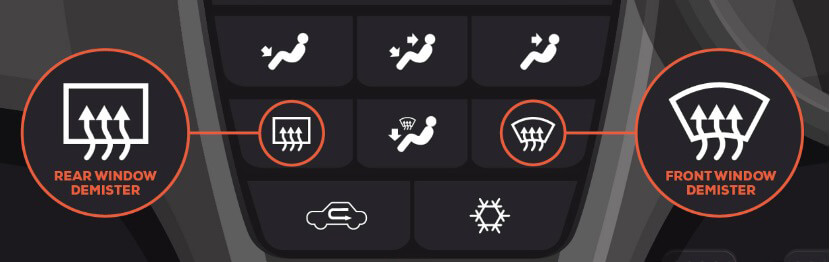
Setting the rear demister
The rear demister can easily be mistaken for the front demister. Just remember that the rear demister has arrows pointing up in a rectangle. If you press the front one by accident without the air conditioning while it’s raining, it can sometimes cause the front windscreen to mist up very quickly.
Operate the horn
This is probably one of the easiest Show Me questions. However, you should always be careful when practising this one, particularly if you are taking driving lessons in Manchester or other such busy cities, where there is likely to be heavy traffic and other road users around. You don’t want to startle another road user or pedestrians when you press the horn, as this can cause an accident.
On your test, the examiner shouldn’t ask you to answer this Show Me question in a busy area, though if you are late responding to the instruction, the situation could change. Only use the horn when it is safe to do so.
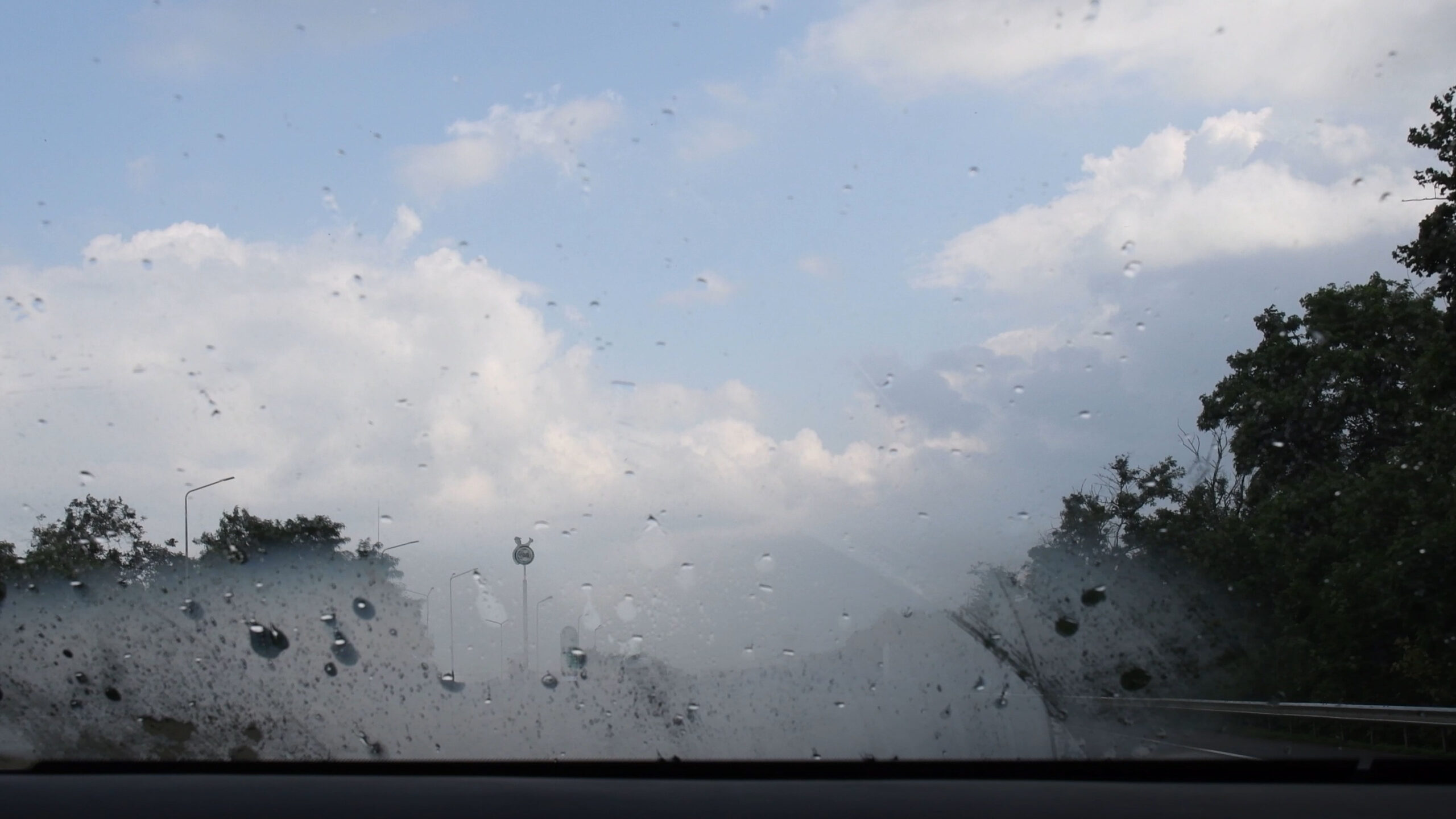
Demist the front windscreen
If you turn the front demister on and off quickly during cold and rainy conditions, you should have no problems. Leaving it on without the air conditioning turned on can be a mistake as it can mist the windows up.
You will be expected to use this button yourself without the examiner’s instruction if your windows mist up on their own. If you are taking your test on a cold, rainy, or icy day, then it may pay to start the test with it on straight away, with the air conditioning as well, to prevent your windows from misting up.
Open and close the side window
Try not to do the examiner’s window if you can help it. During a nice, sunny day, it’s not so bad, but if it’s raining, the last thing you want is to drench the examiner. The side window doesn’t have to go all the way down, but if you are unfamiliar with the window controls, this can easily happen. You can open the window briefly and bring it back up again if you know how to operate the car and you are driving well.
Top tips for all the Show Me questions
Never try to do a Show Me question when you are in a difficult driving moment. For example, avoid doing a Show Me question when you are on a roundabout, trying to change lanes, or while you are overtaking. The examiner should ask you a Show Me question when it’s safe to do so and when you have time to demonstrate the answer. However, something may pop up soon afterwards, such as a car slowing down suddenly or a car cutting in front of you. If this happens, the examiner would expect you to deal with the driving incident first and then, when it is safe, perform the Show Me demonstration.
Most faults that occur around the Show Me question are to do with steering and positioning. If you practice the Show Me questions regularly in your lessons, then you shouldn’t lose control of your steering on the day of your test.
One of our driving instructors in Northampton, Simon Jessop, gives some great advice on this:
“I always tell my pupils to wait for the right moment to answer the Show Me question. I’ve been in tests where another road user has turned up just as a pupil is about to demonstrate an answer. If they wait until that car has passed or it’s clear what the car is doing, the demo tends to go well; otherwise, it’s easy to get distracted by what else is happening on the road, or worse, do something dangerous. Take a moment to think it through before you do it.”

Common mistakes for Tell Me questions
Here are some of the most common mistakes that we see people make when it comes to the Tell Me questions:
Answers are too vague
Examiners want to hear the basic method you would use to do a check, not just that you would do it. For example, for the Tell Me question about tyre tread depth, don’t just say “I’d check the tyres.” The examiner will want to know what you would look for on the tyre, i.e. a tread depth of 1.6mm on the central three-quarters of the tyre and its entire outer circumference, as well as no cuts/bulges.
Answers are too complicated
Some learners go to the opposite end of the scale and get way too in-depth, giving complicated, confusing answers. The examiner wants a simple, straightforward answer. You won’t get any extra points for giving more information. Be clear and just give the details needed.
Mixing up the answers
Confusing tyre tread with tyre condition, or brake lights with headlights, can be easily done when you’re feeling nervous. Practice makes perfect with this problem: learning the questions so you can reel off the answers will mean that even when you’re under pressure, you easily answer without any difficulty.
Top tips for all the Tell Me questions
To ace these questions, practice and taking your time is key. It is perfectly fine to pause for a second to think before answering so that you can collect your thoughts and answer correctly. No need to provide reams of information. Memorise the answers you need to give and run through them as much as possible before the big day. You can even run through them with your instructor before your test to keep them fresh in your mind.
Remember, the examiner is not looking for perfection, just the correct, basic safety information. Give them this and you’ll be fine.
Frequently asked questions
We have put together the answers to some of our most commonly asked questions about the Show Me, Tell Me questions below.
What happens if you get one or both Show Me, Tell Me questions wrong?
In the event you answer both questions incorrectly, you will receive just one driver fault. However, while you are answering the Show Me question, it’s important that you do so safely as the car is moving. See the next question for more information on this.
What are the common mistakes made by a learner on their test when doing the Show Me question?
The most common mistakes learners tend to make tend to boil down to nerves, such as drifting into the wrong lane whilst demonstrating or forgetting where the correct button is. It is important to show you have control of the vehicle throughout, and that you know exactly where the correct controls are. The key to doing this is to practice so that you know the questions and how to demonstrate the answers like the back of your hand. Then you can approach them with confidence.
No one will fail for getting the Show Me question wrong. However, if you attempt to do a Show Me question and it affects your driving, then you will be marked down for this and, in some instances, you could fail your test.

How many Show Me, Tell Me questions do they ask?
You will be asked one Show Me question and one Tell Me question on your test, so two questions in total.
What are the most common Show Me, Tell Me questions?
The DVSA does not publish statistics on how many times each question is asked. Examiners choose from a list of 7 Show Me questions and 14 Tell Me questions, and are not asked to use any of them more than the others. You can read the full list of Show Me, Tell Me questions on the DVSA website here.
Can you fail on Show Me, Tell Me questions?
If you get one or both of the Show Me, Tell Me questions wrong, you will get a minor fault. You need 15 minors to fail your test, so you cannot fail for just answering the Show Me, Tell Me questions wrong.
However, if you lose control of the car or put other road users in danger whilst answering the Show Me question, the examiner may give you a serious fault, which will mean you fail your test.
Are Show Me, Tell Me questions minors if you fail them?
If you answer one or both of the Show Me, Tell Me questions incorrectly, the examiner will give you a minor fault; however, you can receive a major fault on the Show Me question by driving dangerously during your answer.
Final thoughts on the Show Me, Tell Me questions
Remember that the Show Me, Tell Me questions haven’t been designed to catch you out; they have been designed to give you knowledge that will help you for as long as you are driving. By practising the questions, you will get to know the answers back to front, so that you can drive safely and maintain your car both before and after your test.
Your instructor plays a key part in helping you to prepare for these questions, helping you to put your knowledge into practice. At driveJohnson’s, we have friendly instructors across the UK, so whether you’re looking for driving lessons in Southampton, Edinburgh, or anywhere in between, we can help you to feel confident and fully prepared, both on your test and in your future driving journey.
Good luck on your test!

Written by Anthony Johnson
Grade A - 51/51
ORDIT Registered Trainer