Feeling nervous before your driving test is completely normal. Most learner drivers experience some level of driving test anxiety, from mild butterflies to complete panic. The good news is that nerves do not mean you’re not ready to pass: they often show that you care about performing well.
At driveJohnson’s, our driving instructors in Milton Keynes, Aberdeen and across the UK guide learners through these nerves every day, helping them build confidence and stay focused. Here is our complete guide to driving test nerves and how to conquer them.

- Is it normal to feel nervous about a driving test?
- Why driving test nerves happen to the best of us
- How to calm nerves before your driving test
- How to control nerves during your driving test
- Beta blockers for driving test nerves
- Rescue Remedy for driving test nerves
- Extra tips for building confidence before your test
Is it normal to feel nervous about a driving test?
Yes. A small amount of nerves can improve focus and alertness. Problems only occur when anxiety becomes overwhelming.
If your nerves feel intense:
- Talk to your driving instructor.
- Practise relaxation strategies so that you have them ready to go on the day.
- Allow extra preparation time before your test.
Remember, you are not alone. Almost every driver has been through this, and your driveJohnson’s instructor will support you.
Why do driving test nerves happen?
Driving tests naturally create pressure. You are being assessed under strict conditions, it matters to you, and you are likely picturing the many ways it could turn out. That combination can produce physical symptoms such as a racing heart, sweaty palms, or difficulty concentrating.
It is important to remember that these physical reactions are a natural response to stress. They don’t reflect your ability to drive. By recognising driving test nerves early and practising strategies to manage them, you can stay focused and approach your test with calm confidence.

How to calm nerves before your driving test
Proper preparation is one of the most effective ways to manage driving test nerves. This is why our driving instructors in Eastbourne, Edinburgh and elsewhere across the UK will focus so much on helping you to feel fully prepared ahead of your test day. When you feel ready for any challenge, it will affect your confidence, and this, in turn, will improve your driving.
Here are our top tips for preparing for your driving test:
Get plenty of practice
Confidence comes from familiarity. Regular lessons, private practice, and mock tests will help to make the experience feel routine rather than intimidating.
Sleep well
Try to get a good night’s sleep before your test. This will improve your general feeling of well-being, as well as your reaction and concentration time. No need to try to go to bed early; just stick to your usual routine, as this can actually help you to sleep better.
Eat properly
Even if you are feeling nauseous, if you can, try to eat something light before your test. This will stop you from feeling shaky or distracted due to a lack of food.
Visualise success
Going into your test with a positive mindset can make a huge difference to your confidence. Imagine yourself doing well. See yourself driving calmly, responding safely, and completing the test successfully. This can give you a boost on the day.
Try relaxation techniques
Slow, steady breathing can reduce physical anxiety symptoms. Practise slow breathing exercises to signal to your body that you’re safe.
Practise with mock driving tests
Your instructor will give you the opportunity to do some mock tests. Feel free to ask your instructor if you think you are ready to have a go at one. These will give you a great indication of how the test is likely to be carried out and get you used to the format.
Steer clear of last-minute cramming
Trust your preparation. Learning new manoeuvres right before your driving test can actually increase how much pressure you feel under, rather than reduce it.
How to control nerves during your driving test
Even with the best test preparation, nerves may still appear on the day. The key to keeping a clear head is to manage them effectively.
Our top tips for managing nerves on your driving test are:
Focus on one task at a time
Treat the test like a normal driving lesson. Concentrate on the road ahead, not the result. If you get the leg wobbles, try to slow your body movements down by around 50%, particularly the left side, which will be operating the clutch pedal and the gears. A nice, smooth drive will help to settle you.
Time your approaches
When you’re approaching junctions, say to yourself, “I want to time my approach.” If you can time your approaches so you don’t have to stop very often, your examiner will see quite early that you’re a good forward planner, and they will want to pass you.
Don’t panic if you make a mistake
If you make a mistake on your driving test (no matter how bad you think it was), don’t dwell on it. Think to yourself, “Right, no more mistakes”, take some deep, slow breaths, and focus on the road ahead. Many learners assume one error means instant failure, but often this is not the case.
Reset if needed
If you are feeling overwhelmed during your test, try these quick pointers:
- Take a steady breath.
- Refocus on your surroundings.
- Ground yourself: feel the steering wheel, the pedals beneath your feet.
- Listen carefully to the examiner’s instructions.
Remember what examiners are looking for
They are checking to see if you demonstrate:
- Safe decision-making
- Awareness of other road users
- Controlled vehicle handling
They are not expecting flawless driving. Also, if you have been driving well and you do make a mistake, just remember that the examiner can use their discretion. This means that if the rest of your drive is good, something you might consider a fail, the examiner may just mark it down as a minor fault.
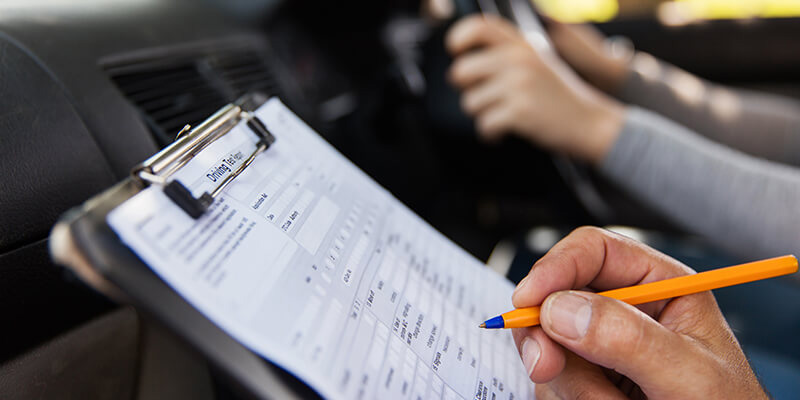
The examiner will write during the test
If you see the examiner writing or marking something down on their board, don’t panic. They often have to mark down aspects of the test. For example, when you complete a manoeuvre, they will have to mark it off. Some examiners leave the marking until the very end, so don’t worry!
Enjoy your driving test
As daft as it sounds, try to enjoy the test. Don’t fear it, just think to yourself, “My objective today is to give this guy in a tie (examiner) the best drive of their life.”
Do people take beta blockers for driving test nerves?
Some learners ask about taking beta blockers for driving test anxiety. Beta blockers are prescription medications that can reduce physical symptoms of nervousness, such as a rapid heartbeat or shaking.
Important points to remember about beta blockers:
- They must be prescribed by a GP or medical professional.
- They reduce the physical symptoms of anxiety, but not the anxiety itself.
- Always try any prescribed medication before your test to check the effects, and if you experience dizziness or fatigue, speak to your GP before driving.
Medication isn’t necessary for most learners, but going over your options with a medical professional can help if the anxiety seems overwhelming.
Do people use Rescue Remedy for driving test nerves?
Some learners choose Rescue Remedy for driving test or other similar flower essences as a natural option for calming nerves. Rescue Remedy is said to help you relax and increase focus, and some learners find it helpful for driving test nerves.
What to know:
- Some learners find it calming.
- Scientific evidence on its effectiveness is limited.
- Try it before your driving test rather than for the first time on the day, in case it doesn’t agree with you.
- It should never replace proper preparation or professional medical advice.

Extra tips for building confidence before your test
If your instructor says you’re ready, that should give you a good boost of confidence. Any instructor with standards and a good pass rate won’t put a pupil forward for their test unless they truly believe they are prepared.
However, it’s one thing for them to believe in you; another for you to believe in yourself, so here are some ways to strengthen your driving confidence:
- Take mock tests with your driving instructor.
- Practise driving in varied traffic conditions.
- Drive around the test area in advance if possible.
- Ask questions about anything you’re unsure about in advance of your test.
By taking these steps to prepare, you will reduce your uncertainty, a major cause of anxiety. The more you know about your driving test, the less nervous you will be.
Final thoughts on driving test anxiety
Driving test nerves should not stand in the way of you passing your driving test. With good preparation and a few calming strategies, you can overcome any anxiety and smash your test on the day.
Focus on safe driving, trust your training, and remember that the examiner simply wants to see you drive responsibly. Whether you’re taking driving lessons in Luton, Truro, or Glasgow, your examiner will be looking for a basic level of safety and competence, not 20 years of experience. They expect you to be nervous, and they’ll take this into account when assessing you.
You can do this!

Written by Anthony Johnson
Grade A - 51/51
ORDIT Registered Trainer