If you’re autistic and wondering whether you can learn to drive, the answer is yes, you absolutely can.
Being autistic doesn’t stop you from learning to drive or passing your driving test. Like any learner, everyone is different, and many autistic people go on to become safe, confident drivers.
Learning to drive can be a big step towards gaining more freedom and independence. If you’re autistic and thinking about starting driving lessons, you may have questions about what lessons will be like and whether they can be adapted to suit the way you learn.
In this guide, we’ll explain what learning to drive with autism can involve, some of the challenges you might face, how lessons may be adapted and the steps you can take to help make learning feel more manageable.
Use the links below to jump straight to the section that’s most relevant to you.
- Learning to Drive With Autism: Understanding ASD and Driving
- Do You Need to Tell the DVLA?
- Challenges You Might Face When Learning to Drive With Autism
- How Can Driving Lessons Be Adapted to Suit You?
- Top Tips to Help You Learn to Drive With Autism
Learning to Drive With Autism: Understanding ASD and Driving
If you’re autistic, you might be wondering whether driving lessons will be different for you. The answer is that they can be, as every autistic learner has their own strengths, preferences and way of learning. Your lessons should be tailored around your individual needs, helping you learn in a way that works best for you.
As your lessons progress, both you and your instructor will learn more about what helps you get the most out of each lesson. Working together, you’ll be able to build an approach that suits you and make small adjustments along the way where needed.
You may also be wondering whether to learn in a manual or automatic car. There’s no right or wrong choice simply because you’re autistic. Many autistic learners learn and pass their test in a manual car, while others find an automatic better suits their needs and circumstances. Your choice should depend on your individual needs, preferences and future plans, rather than autism itself.
Do You Need to Tell the DVLA?
Being autistic doesn’t automatically mean you need to tell the DVLA. You only need to notify them if your autism affects your ability to drive safely. If you’re unsure whether this applies to you, speak to your doctor and check the latest guidance on the GOV.UK website before learning to drive.
You may also be able to get additional support when you book your theory test.
If you need additional support during your theory test because of a disability or health condition, you may be able to request reasonable adjustments when booking. The support available will depend on your individual circumstances, so it’s worth checking what assistance may be available before your test.

Challenges You Might Face When Learning to Drive With Autism
Learning to drive means taking in a lot of new information, so it’s perfectly natural for some parts to take longer than others. As autism affects everyone differently, there isn’t a one-size-fits-all experience, and what one person finds difficult may not affect someone else at all.
For example, some people may need extra time to process instructions, particularly in busy traffic, where you may need to take in road signs, pedestrians, cyclists and the actions of other drivers at the same time. Others may find unfamiliar situations, such as approaching a new junction or driving on a different route for the first time, more challenging until they’ve had the chance to practise them.
Sensory differences can also affect how comfortable driving feels. Depending on the individual, things that may become distracting or overwhelming include:
- Bright sunlight or headlights
- Traffic noise or car horns
- Strong smells inside or outside the car
- The temperature inside the vehicle
- Multiple conversations or other background noise
Unexpected situations, such as road closures, diversions or other drivers behaving unpredictably, can also take a little getting used to. Just like most learner drivers, you may feel anxious about these situations, or about making mistakes and driving somewhere unfamiliar, particularly during the early stages of your lessons.
If any of these experiences sound familiar, it doesn’t mean you’re any less capable of learning to drive. Understanding what works well for you, and what you’d like more support with, can help make your lessons feel more comfortable and enjoyable.
How Can Driving Lessons Be Adapted to Suit You?
Every learner responds differently to the way new skills are explained and practised. Your instructor should take the time to understand how you learn and adjust their teaching as your lessons progress.
You may find that some teaching approaches suit you better than others. For example, you might prefer clear, straightforward instructions, while someone else may find demonstrations or diagrams easier to follow. You may appreciate having a little longer to become comfortable with a new skill before moving on, or simply like to know what to expect before the lesson begins.
As you spend more time learning together, your instructor will get to know how you learn best.
Every Learner Is Different
The points below aren’t a checklist that every learner will need. They’re simply examples of ways lessons can be adapted to help you get the most out of your time behind the wheel.
Your instructor may:
- Provide a consistent lesson structure: Your instructor may explain what you’ll be covering at the start of the lesson, recap your progress at the end and discuss what you’ll be working on next time. Having a structure can help you feel more prepared and give you a clearer idea of what to expect.
- Introduce new skills gradually: You might spend longer becoming comfortable with one skill before moving on to the next, rather than trying to learn several new things at once. Building your confidence step by step can make learning feel more manageable.
- Adapt the way they explain things: They may use clear, straightforward instructions, break directions into smaller steps or demonstrate a skill in a different way until you find an approach that works well for you.
- Allow extra time to process new information: If you’re learning something new, your instructor may give you a little more time to think about an instruction before expecting a response or moving on. This can help you feel less rushed and more confident as your skills develop.
- Explain why you’re being asked to do something: Understanding why you’re using a particular technique can often make it easier to remember and apply, rather than simply following instructions without knowing the reason behind them.
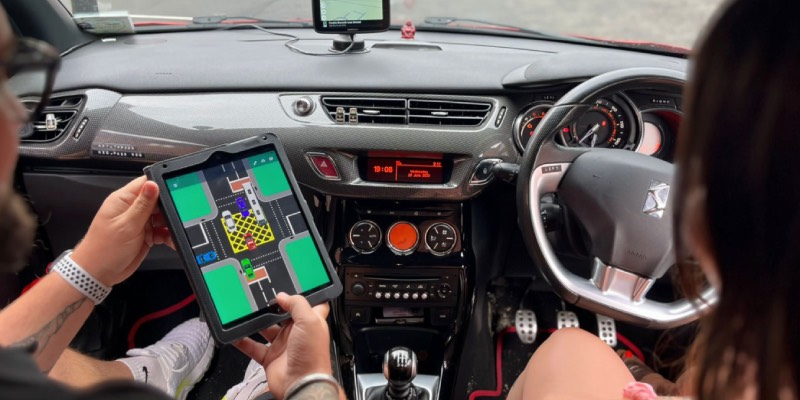
- Use visual aids where helpful: Depending on what works best for you, your instructor may use diagrams, sketches or reference points to explain junctions, manoeuvres or road positioning, helping make more complex topics easier to understand.
- Reduce unnecessary distractions: Your instructor may keep conversation to a minimum while you’re concentrating on a new skill to help create a calmer learning environment.
- Take regular breaks where appropriate: If taking a short break during a lesson would help you stay focused and comfortable, your instructor may suggest stopping somewhere safe for a few minutes before continuing.
If there’s anything you think would help you get the most out of your lessons, don’t be afraid to mention it to your instructor. If you’re not sure, that’s okay too. You’ll learn together what works best as your lessons progress.
Below are some experiences shared by learners describing the approaches that made a positive difference during their driving lessons.
I’m autistic and I really struggled with roundabouts to begin with. There was one lesson where I went round the same one about six times because I kept getting myself in a muddle. I remember apologising and Deborah just said, “That’s what lessons are for.” We both laughed and carried on. I still think about that now because it took the pressure off.
I have ASD and I always worried I’d ask too many questions. I probably did ask loads, but Wajid never seemed bothered. If I didn’t understand something, he’d explain it again without making me feel silly. By the time I passed, asking questions had just become part of my lessons.
Learning to drive had been something I’d put off for ages because I’m autistic and didn’t think I’d cope with it. There were definitely lessons that felt harder than others, but Rob always stayed calm and never made me feel like I was holding things up. Passing my test felt like a much bigger achievement because I’d nearly talked myself out of starting.
I told Jeff that I have autism because I sometimes need a bit longer to get used to new things. On my first lesson I thought we’d be driving straight onto busy roads, but we stayed on quiet streets for a while until I settled in. By the end of the lesson I couldn’t believe how much I’d actually done.
I would like to leave a positive review for Ahdil Ismathdeen. Ahdil makes me feel relaxed, comfortable and happy behind the wheel. He has helped me rebuild my confidence. Ahdil is understanding of my autism, mental health, and being non-verbal. He understands that I am unable to communicate in the usual way. Ahdil is kind, calm, and professional in every lesson. He never makes me feel pressured or uncomfortable. His instructions are always clear and easy to understand. Ahdil even took me on the motorway so I could experience that side of driving too, which was a big thing for me. I am very grateful for all the patience, kindness and support Ahdil has shown. I really appreciate everything he has done for me. I would highly recommend him. Thank you so much, Ahdil. From DJ.
Top Tips to Help You Learn to Drive With Autism
Learning to drive is a new experience, and it’s completely normal to take a little time to settle into your lessons. While your instructor can adapt their teaching where appropriate, there are also things you can do to help yourself feel more comfortable and confident throughout the learning process.
Here are some practical tips that may help support you before and during your driving lessons.
Starting driving lessons can feel like a big step. If it would help you feel more comfortable, ask your instructor whether a friend or family member can come along for your first lesson. Having someone familiar there while you meet your instructor and get used to the car may help you feel more relaxed.
If having a consistent routine works well for you, try booking your lessons for the same day and time each week where possible. Knowing when your lessons are scheduled can make them feel more predictable and give you one less thing to think about.
Some people find it helpful to know what to expect before trying something new. Before your lesson, you could explore our Learning Centre or watch videos on our YouTube channel to familiarise yourself with the topic you’ll be covering. Arriving with a better understanding of what to expect may help you feel more prepared and confident.
If asking questions beforehand helps you feel more confident, don’t hesitate to do so. These are some examples of questions you may find helpful before booking your first lesson.
- Can I have lessons on the same day and time each week?
- Has this instructor had experience teaching learners with autism?
- Can I speak to my instructor before my first lesson so I can get to know them a little better?
- Can a friend or family member come along to my first lesson?
- Is there anything I need to bring to my first lesson?
- What will happen during my first lesson?

Learning in a Way That Works for You
Learning to drive with autism isn’t about changing who you are – it’s about finding an approach that works for you. The right instructor will take the time to understand how you learn best, communicate in a way that suits you and help you build your confidence at a pace that’s comfortable for you.
Everyone learns differently, and the most important thing is finding an approach that works for you. If you’d prefer a shorter introduction to learning to drive, our one-hour taster lesson is a great place to start. It gives you the opportunity to meet your instructor, become familiar with the car and see whether their teaching style feels like a good fit for you.
Get in Touch and Let Us Know What Helps You Learn
Whether you’re looking for lessons yourself or supporting a family member or someone else on their journey to learning to drive, we’re here to help.
The more you can tell us about your autism and how you learn best, the better we can support you. Many of our instructors have extensive experience teaching autistic learners. Speak to our office team, and we’ll match you with an instructor we think you’ll enjoy learning to drive with.
If you’d like to discuss your needs before booking, or simply have a few questions about learning to drive with autism, use the contact form below to get in touch. We’ll be happy to answer your questions and help you take the next step towards learning to drive.