Objectives: You should be able to identify a safe and legal place to carry out the parallel park. You should be able to park close to and parallel with the kerb by reversing into a space between one and a half and twice the length of the training vehicle. The manoeuvre should be completed under control, with due regard for the safety of other road users.
How to do parallel parking – a full guide for learner drivers
Struggling with parking in tight spaces? Parallel parking can be a great way to pull into a space at the side of the road. Our driving instructors see this manoeuvre challenge learners everywhere, from busy town centres to quieter residential roads across the UK. It might look difficult, but with the right steps, a bit of focus and some practice, it will become a reliable skill for life.
Whether you’re prepping for your driving test or want to nail real‑world parallel parks, this guide walks you through every essential element of how to do parallel parking confidently and safely.
- What is parallel parking?
- Parallel parking steps
- How to parallel park on your driving test
- Watch our instructor, Rob, give a demonstration
- Tips for parallel parking success
- Can you look over your shoulder when parallel parking?
- Should you indicate when parallel parking?
- How to fix parallel parking mistakes
- How not to hit the kerb when parallel parking
- How to get out of a tight parallel parking spot
- How many attempts do you get to parallel park in your test?
What is parallel parking?
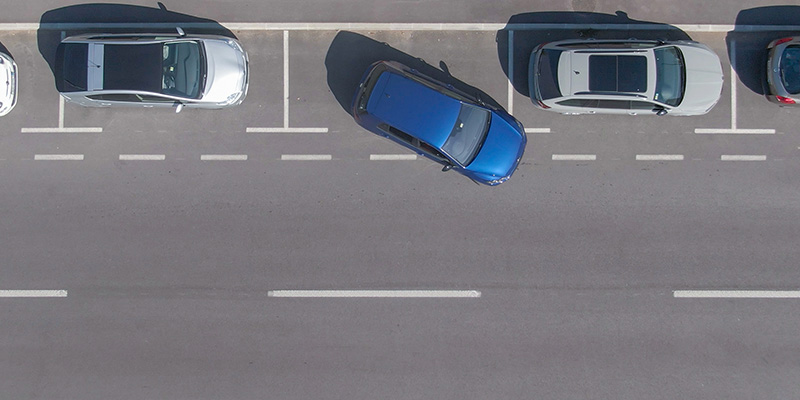
Parallel parking is the manoeuvre of reversing your car into a gap between two parked vehicles so that your car sits neatly parallel to the kerb. Learning how to reverse parallel park safely is an essential skill for both the driving test and everyday driving.
On the UK driving test, you’ll usually be asked to reverse behind just one parked car into a space and finish comfortably close to the kerb and within about two car lengths of the vehicle in front.
Parallel parking steps
These steps break the parallel parking down into simple stages that your driving instructor will guide you through in lessons.
Make sure it’s safe and legal
Try to avoid blocking driveways, parking too close to a junction or on double yellow lines. There’s more, so check the Highway Code.
Initial approach
Apply the MSPSL routine. Remember, if there is a car behind you, slow down gradually so you don’t surprise them.
Start position
You should be roughly an open car door away from the parked car, and your boot should look level with their boot.
The routine, using focal points
There are many techniques, but this one works well: left, right, right, left – full turns only. This routine will give you a consistent structure, but your instructor may adjust the timing slightly depending on the size of the car you’re learning in.
Turn left when both car boots are in line or level with your car.

Turn right when you see a 45-degree angle in your door mirror, like a slice of pizza. Looking straight ahead, you should look out for the front of your car’s bonnet pointing in the 2 o’clock position.
Reverse back for a short time, until the kerb disappears in your left door mirror. Now turn right again.
The front end of the car will begin to swing in. Once it looks parallel, or directly behind the car in front of you, then straighten the wheels (i.e. turn left) to finish. Your instructor may adjust the focal points slightly, depending on the car you are learning in.
Observations
Before you start the manoeuvre, do a 360 observation. When reversing, look over the left shoulder and mainly glance ahead for approaching traffic. Remember to look over your right shoulder at least twice; more if necessary. A good time to check your right shoulder is on both occasions when you turn the steering wheel to the right.
This is something our driving instructors in Coalville and other towns regularly reinforce during their lessons, as good observations are just as important as steering accuracy.
Priorities
Remember, you do not have priority. If a vehicle is approaching, you may need to acknowledge it’s their priority by stopping so they then feel it’s safe to pass you. Always stop for pedestrians walking near or around your car, and only proceed when they have cleared the area.
How to parallel park on your driving test
On your test, the DVSA driving examiner will get you to stop behind a parked car and then say the following:
“I would like you to drive up, and next to the car in front. I would then like you to perform the parallel park manoeuvre, reversing in behind the parked car, finishing reasonably close to the kerb. Try to finish within two
car lengths of the car in front.”
Below is a clear guide on how to do the parallel park step by step on your driving test, focusing on control, observations and safe corrections.
How to parallel park
- Prepare the car and look all around you, starting from the left shoulder and finishing over the right shoulder, completing the 6 checks of a 360-degree observation. If no one is coming up or down the road, move out.
- Check your interior mirror early before pulling up next to the parked car. If someone is behind you, apply a signal and stop gently and smoothly. If nobody is around, no signal is required.
- Use the handbrake if necessary, put the gear lever into reverse and cancel your signal if it is on. Your reverse light is now on, so vehicles behind should understand you are about to reverse.
- Prepare the car again with the clutch at the biting point so you don’t roll in the wrong direction when releasing the handbrake. Avoid having the clutch too high, or you may reverse too fast.
- Look all around you again, starting from right to left. If safe, release the handbrake.
- As soon as the car moves back, turn the steering wheel one full turn left when the boot of your car is in line with or just past the back of the parked car. Avoid dry steering.
- Keep reversing slowly, dipping the clutch if you need to slow down, and continue looking over your left shoulder while glancing in your left door mirror without staring.
- When you see an angle like a slice of pizza, quickly glance over your right shoulder and turn the steering wheel one full turn right. If you need to stop briefly to look, that’s fine.
- Continue reversing very slowly, looking all around you, especially over your left shoulder. Always observe as if pedestrians or traffic could appear at any moment.
- When you see the kerb drop underneath the front part of your door handle, turn one full turn right for the final time. As the car swings into the space, keep the speed slow, stop if vehicles approach, and once parallel with the kerb, straighten the wheels to the left while continuing full observations.
Still struggling? Watch our instructor, Rob, give a demonstration
Rob goes through his technique and gives guidance on how to perfect the parallel park on your driving test.
Tips for parallel parking success
Keep these tips in mind, and this manoeuvre becomes far more manageable, both on your driving test and in everyday driving.
- Practice: Practice in a variety of real‑world spaces and with cones at home.
- Take your time: Keep calm and go slow.
- Move to look around: Use your mirrors, but remember to look over your shoulder when going backwards to get a better view. Checking your blind spot by moving your head helps to make sure there are no pedestrians, cyclists or approaching vehicles.
- Correct if needed: Feel free to reset and correct if needed. Take a shunt if you think you’re going to bump the kerb. A shunt is when you put the car into 1st gear and move forward, to give you space to reverse backwards again and correct your position. Always look all around you before you move forward, and try to avoid going all the way back to the start position. It is OK to take a shunt on your driving test.
- Do not wave: Avoid waving other cars on or indicating to pedestrians to cross the road. Another road user may not have seen you waving, and an accident could happen. Also, the examiner could mark it as a serious or minor fault, depending on the effect it has on others.
- Stop before you turn: It will help at the beginning to stop and identify when you should turn the wheel. If you get it right, then the routine will work virtually every time.
Frequently asked questions about parallel parking
Every year, our driving instructors see the same parallel parking questions come up time and time again. We find that learners taking driving lessons in Farnborough and across the UK often have similar concerns about what’s allowed, what examiners expect, and how to fix mistakes.
We have pulled together below clear answers to the most common questions we hear about this manoeuvre.
Can you look over your shoulder when parallel parking?
Yes, you can. We recommend using your mirrors, but also looking directly over your shoulder when going backwards to get a better view. Checking your blind spot by moving your head helps to make sure there are no pedestrians, cyclists or approaching vehicles.

How much space do you need to parallel park?
You’ll need a space roughly one and a half to twice the length of your car to perform a standard parallel park. This gives you room to steer in, bring the front round and finish without bumping the kerb or neighbouring cars.
Should you indicate when parallel parking?
When preparing to parallel park, your priority should always be making your intentions clear to anyone around you and avoiding confusion on the road. Only signal if there are other road users around who may need to know what you intend to do. If the road is clear, signalling isn’t strictly required before you start reversing, but do use it when necessary for safety.
How to fix parallel parking mistakes
If you find yourself in the wrong position during the parallel park:
- Don’t panic! Stop, and keep doing your observations.
- Pull forward slightly, re‑straighten your wheels, and try the reversing sequence again.
- On your driving test, your examiner will expect to see more careful attempts with corrections rather than perfect first attempts.
You can take multiple attempts to get it right as long as you’re progressing safely and not causing danger or disruption. Communication with the examiner also helps if you need to reset.
How not to hit the kerb when parallel parking
Hitting the kerb happens when you steer too early or go too fast. To avoid this:
- Keep your speed slow and controlled.
- Look at your left mirror and glance over your shoulder so you know where the kerb is at each stage.
- If you do approach it too closely, stop and take a shunt (move forward a bit and then reverse again) to reset your angle.
Many cities and towns in the UK have high kerbs, so bear this in mind when taking your driving lessons in Manchester, Birmingham, London and other highly populated areas.
How to get out of a tight parallel parking spot
Once parked, getting out is just the reverse of getting in:
- Check all around for traffic and pedestrians.
- Signal if other road users may benefit from knowing your intention.
- Select reverse and steer away from the kerb slowly, straightening once clear.
- Use your mirrors and look over your shoulder as you turn into the road.
- If space is tight, reverse forward and back a few times in small moves until you can safely join the flow.
How many attempts do you get to parallel park in your test?
There’s no strict limit on how many attempts you get to complete the manoeuvre on your test. What matters is that you’re safe and making progress. Examiners can allow corrections where necessary, provided the approach is controlled as well as observant.
Final points to remember on parallel parking
Parallel parking isn’t about doing it perfectly; it’s about control, awareness and staying steady under pressure. The drivers who struggle most are usually rushing or doubting themselves. With regular practice and a steady approach, parallel parking quickly becomes second nature.
This is true no matter where you are learning to drive. Whether you are taking driving lessons in Watford, Wakefield or Weymouth, examiners are not expecting perfection: they want to see safe decisions, good observations and confident corrections. Master those, and parallel parking turns from a test fear into a genuine driving skill.

Written by Anthony Johnson
Grade A - 51/51
ORDIT Registered Trainer