On this page
If you’re trying to decide between manual or automatic driving lessons, you’re not alone. It’s one of the most common questions learners ask before they start learning to drive. Both options have their own advantages, so it’s worth understanding the differences before deciding which one is right for you.
What’s the Difference Between Manual and Automatic Driving Lessons?
Before deciding which type of driving lessons to take, it helps to understand the main differences between a manual and an automatic car. Although they look similar, there are a few features that make them quite different to drive.
Manual Driving Lessons
- Three pedals (clutch, brake and accelerator)
- You change gears yourself
- Requires clutch control
- Can drive in manual or automatic after passing your test
Automatic Driving Lessons
- Two pedals (only the brake and accelerator)
- The car changes gears automatically
- No clutch control
- Can only drive automatic cars after passing your test
Understanding the Gear Stick
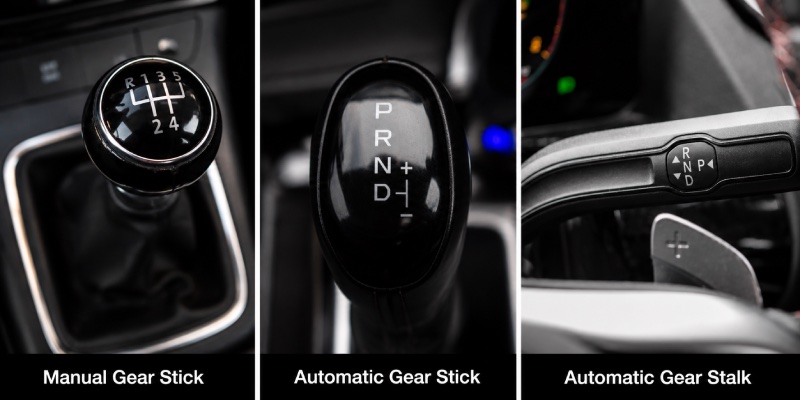
One of the first things you’ll probably notice is that the gear sticks look quite different. In a manual car, you’ll use the gear stick to move between the different gears as you pick up speed or slow down. Reverse (R) is selected separately whenever you need to reverse the car.
In an automatic car, you’ll usually have either an automatic gear stick or gear stalk. Instead of moving between individual gears yourself, you’ll typically see Park (P), Reverse (R), Neutral (N) and Drive (D). Once you’ve selected Drive, the car changes gear for you as your speed changes. Some newer automatic cars have the gear stalk mounted on the steering column instead of the centre console, but they work in exactly the same way.
The Pedals and Clutch
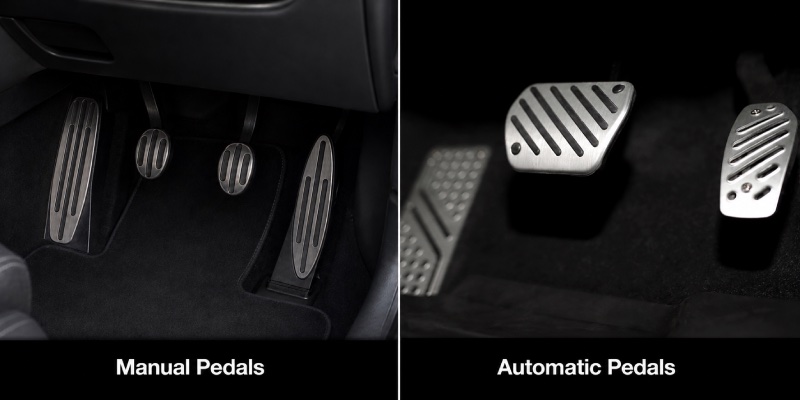
Another obvious difference is the pedals. A manual car has three: the clutch, brake and accelerator. An automatic has just two: the brake and accelerator.
The extra pedal in a manual car is the clutch. It works alongside the gear stick to help you move away, stop and change gear. In an automatic, the car takes care of this for you, so you’ll only use the brake and accelerator.
Licence Differences
The type of licence you receive depends on the type of car you pass your driving test in.
If you pass your test in a manual car, you’ll be able to drive both manual and automatic cars. If you pass in an automatic car, your licence will only allow you to drive automatic vehicles. You’ll also see Code 78 on your licence. It’s one of the codes on a driving licence and shows that you’re restricted to driving automatic vehicles.
If you later decide you’d like to drive a manual car, you’ll need to pass another practical driving test in a manual vehicle. You won’t need another provisional licence or theory test to upgrade your licence.
FUN FACT: Although many people think automatic cars are a fairly recent invention, they’ve actually been around since the 1930s. It’s only in more recent years, with the rise of hybrid and electric vehicles, that they’ve become a much more common choice for learner drivers.
Are Manual or Automatic Driving Lessons Easier?
Unfortunately, there isn’t a straightforward answer – both manual and automatic driving lessons have different challenges, so one isn’t necessarily easier than the other.
Whichever transmission you go for, you’ll need to learn how to:
- Use your mirrors and check your surroundings
- Understand road signs, markings and speed limits
- Move off, stop and position the car safely
- Approach junctions, roundabouts and crossings correctly
- Deal with other road users, including cyclists, pedestrians and horses
- Anticipate hazards and react safely to changing road conditions
The main difference is that, in a manual car, you’ll also learn how to use the clutch and gears. That’s usually why people think manual is harder to learn or takes a little longer. In reality, it’s just one extra skill to get used to, and most learners find it quickly becomes second nature.
Although you won’t have to think about gear changes if you choose automatic, you’ll still need to read the road, plan ahead and deal with busy traffic. You’ll be developing the same skills needed to pass your driving test and become a safe driver. However, if you’re driving with a disability, you may find automatic driving lessons are a better fit if you need vehicle adaptations or are finding it difficult to use the clutch.
Is It Cheaper to Learn in a Manual or Automatic Car?
In most cases, manual driving lessons are slightly cheaper than automatic lessons, so the overall cost of learning can be lower. Some learners also think they will need fewer lessons in an automatic because they don’t have to learn clutch control or how to change gears.
However, that’s only part of the picture. National averages are useful as a guide, but they don’t account for the factors that influence how many lessons you will need before you’re ready for your driving test.
Some of the biggest factors that can affect the number of lessons you’ll need include:
- Your age: Everyone learns differently, but younger learners are often able to pick up new skills a little more quickly than older learners.
- Lesson frequency: Taking lessons regularly helps you retain what you’ve learnt and build on each lesson more effectively.
- Lesson duration: Learners usually find longer lessons allow them to cover more in a single session than shorter lessons.
- Private practice: Practising between lessons with a suitable supervising driver can reinforce what you’ve learnt and build your experience.
- Where you learn: Learning in a busy town or city may mean you come across more challenging roads, junctions and traffic than you would in a quieter rural area, which can affect how quickly you progress.
- Your confidence and previous experience: If you’ve already had some experience on the road, such as riding a motorcycle or practising on private land, you may already be familiar with some aspects of driving.
When thinking about the cost of learning to drive, it’s worth looking beyond the average number of lessons. Estimates can provide a useful guide, but the actual number of lessons you need will depend on your own circumstances and the factors above.
Why Learners Still Choose Manual Driving Lessons
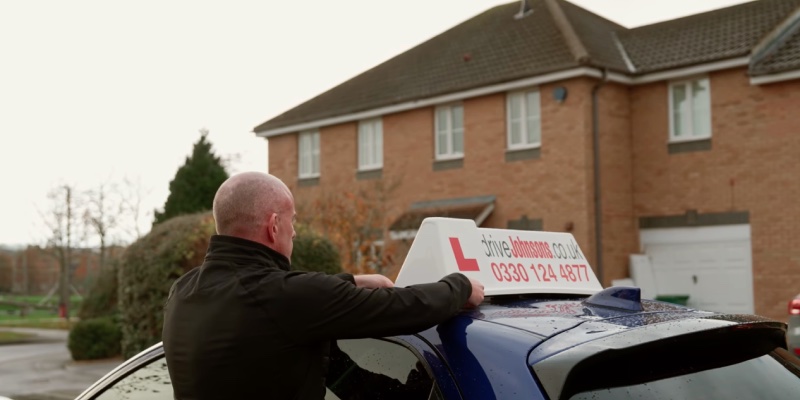
Although automatic driving lessons have become more popular in recent years, manual remains the most popular choice for UK learners. During 2025–26, automatic tests accounted for around 29.5%* of all practical car driving tests, meaning more than 7 in 10 learners still chose to take their test in a manual car.
*Calculated using data from the DVSA’s official practical driving test statistics spreadsheets.
There are plenty of reasons why manual driving lessons continue to be the most popular choice. Here are some of the reasons learners still choose to learn in a manual car:
- Borrowing or Hiring a Car: Passing your test in a manual means you’ll be able to drive both manual and automatic cars. That can be useful if you ever need to hire a vehicle or borrow someone else’s.
- Buying Your First Car: Although a lot of new cars are now being built with automatic gearboxes, there are still more manual cars available on the used market. Having a manual licence means you won’t have to rule out a suitable car simply because it’s a manual.
- Driving for Work: Many employers prefer applicants to hold a full manual driving licence, particularly where company vehicles are manual. Having a manual licence means you’ll meet the driving licence requirements for both manual and automatic vehicles.
- Hiring a Car Abroad: Manual hire cars are still widely available in many European countries and are often the more affordable option. Having a manual licence means you’ll be able to choose between both manual and automatic hire cars while travelling.
These advantages can make learning in a manual worthwhile, even if you plan to drive an automatic after passing your test. If your circumstances change in the future, having a manual licence means you’ll still have the option to drive any car without needing to take another practical driving test.
Frequently Asked Questions
Still got a few questions? Some of our driving instructors have shared their answers to the questions learners ask most often when deciding between manual and automatic driving lessons.
Yes. It’s perfectly possible to start learning in a manual car and switch to automatic later if you decide it’s a better fit for you. The skills you’ve already developed, such as observations, road positioning and dealing with traffic, will all carry across, so you won’t be starting from scratch.
Before making the switch, I’d always recommend taking a little time to think about what’s causing the difficulty. If it’s mainly clutch control or gear changes, you may simply need a few more lessons for everything to click into place. If you still feel that automatic would suit you better after that, there’s nothing wrong with changing course.
Answered by: Lee Paul Serwatka – offering driving lessons in Leeds
Don’t judge it too quickly. It’s completely normal to find clutch control and gear changes difficult at first, and it’s often those skills that take the longest to feel natural.
If you’re making steady progress, even if it feels slower than you’d like, I’d usually recommend sticking with it for a little longer. It’s surprising how often everything suddenly clicks into place after a few more lessons. On the other hand, if learning in a manual is consistently holding you back and stopping you from enjoying your lessons, switching to automatic may be the better option for you.
Answered by: Abdul Basit – one of our driving instructors in Luton
Personally, I’d usually recommend learning in a manual if it’s a realistic option for you. Passing your test in a manual means you’ll be able to drive both manual and automatic cars afterwards, giving you more flexibility in the future.
That said, I wouldn’t recommend learning in a manual at all costs. If an automatic car is more suited to your circumstances and is likely to help you enjoy learning more, then that’s the option I’d suggest. The most important thing is finding the approach that works best for you and helps you reach your goal of passing your driving test.
Answered by: Glenn Jones – offering driving lessons in Northampton
Choosing between manual and automatic driving lessons when driving with a disability depends on your individual circumstances. The right option will vary depending on the type of disability, any vehicle adaptations you may need and what you feel most comfortable driving.
If you’re still unsure which option is right for you, the office team is really friendly and will be happy to answer any questions you have. They can help you decide whether manual or automatic driving lessons are likely to suit your needs.
Answered by: Ian Dickman – one of our driving instructors in Leicester
Not anytime soon. While more manufacturers are focusing on electric and automatic cars, there are still millions of manual cars on UK roads, and they’re likely to be around for many years yet.
I certainly wouldn’t avoid learning in a manual just because you’ve heard they’re disappearing. There will still be plenty of opportunities to own, borrow or drive a manual car for years to come, so I don’t think it’s something learners should be concerned about.
Answered by: Mark Glantz – who offers driving lessons in Bedford
Stalling the car doesn’t automatically mean you’ve failed your driving test. It all depends on what happens afterwards. If you stay calm, restart the engine safely and move away when it’s safe to do so, you’re likely to receive no more than a minor fault.
In my experience, the biggest mistake learners make after stalling is assuming they’ve already failed and letting it affect the rest of their drive. Even experienced drivers stall from time to time. The examiner will be much more interested in how you deal with the situation than the stall itself.
Answered by: Tracy Gregory – one of our driving instructors in Slough

Making the Right Choice for Your Driving Lessons
By now, you should have a much better idea of whether manual or automatic driving lessons are likely to suit you. Whichever you choose, the end goal is the same – getting you on the road.
If you’re still weighing up your options, use the postcode search below to find lesson prices in your area and book an assessment lesson. It’s the perfect opportunity to get behind the wheel, ask any questions you have and find out whether manual or automatic driving lessons are likely to suit you best.
Looking for Driving Lessons?
Check lesson prices and availability near you. Learn with a trusted driving school with over 800 DVSA-approved instructors across the UK.
We have manual instructors in your area!
—per hour
Be first to hear when lessons become available
We don't currently have manual instructors available around . Leave your details and we'll let you know when that changes.
We’ll contact you when lessons become available in your area.
We couldn't check prices just now
Please try again in a moment, or continue to our prices page.
Go to lesson prices →
Grade A - 51/51
ORDIT Registered Trainer