Passing parked cars can seem fairly straightforward at first, but it becomes much more challenging when the road narrows, parked vehicles restrict your view and you have oncoming traffic to deal with at the same time. Knowing when to proceed, when to give way and how to judge the available space are important skills to develop, and getting these decisions wrong can lead to faults on your driving test.
Once you’ve covered the basics, including clutch control, turning left, turning right and T-junctions, your instructor will usually introduce parked cars progressively. For example, if you’re taking driving lessons in Milton Keynes, you might begin on a quieter road such as Nottingham Grove, where there are fewer parked vehicles to deal with, before progressing to roads such as Tavistock Street, where parked cars on both sides can make meeting oncoming traffic more challenging.
In this guide, we’ll explain how to approach these situations and who should give way when passing parked cars.
- How to Deal With Parked Cars and Oncoming Traffic
- Who Has Priority When Passing Parked Cars?
- Where Should You Wait When an Oncoming Car Approaches?
- How Much Room Should You Leave From Parked Cars?
- Can Two Cars Pass Parked Cars at the Same Time?
- How Far Ahead Should You Look When Passing Parked Cars?
- Common Driving Test Mistakes With Parked Cars
- Frequently Asked Questions
How to Deal With Parked Cars and Oncoming Traffic
Dealing with parked cars and oncoming traffic is something you’ll come across regularly during your driving lessons, and it’s a situation where good judgement, patience and awareness are important. When parked cars narrow the road, you need to look ahead, work out who has priority and adjust your speed early so you’re prepared to stop and give way if necessary.
As a general rule, if the parked cars or other obstruction are on your side of the road, you should give way to oncoming traffic before moving out to pass. However, it won’t always be as simple as seeing an obstruction and stopping. You’ll need to judge each situation as it develops, which is why we teach learners to follow a simple routine:

Who Has Priority When Passing Parked Cars?
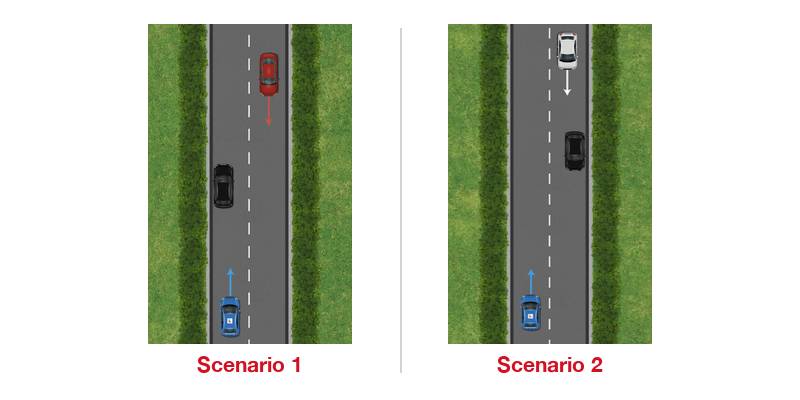
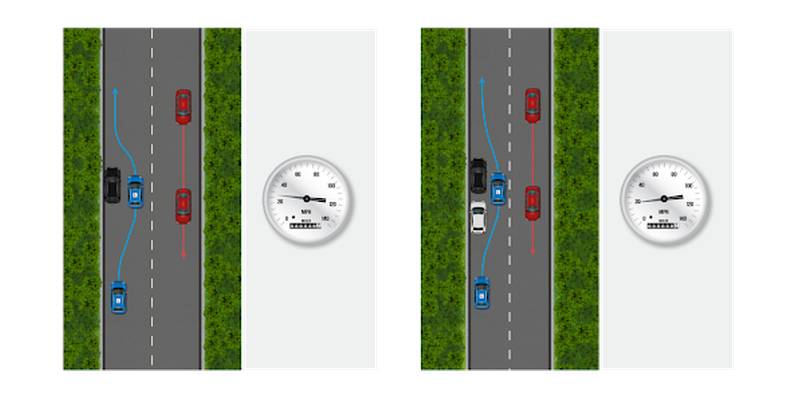
The diagrams above show the general rule in each situation. If the parked cars are on your side of the road and you need to move out to pass them, you should usually give way to oncoming traffic. This means the blue car should give way in scenario 1, while the white car should give way in scenario 2.
However, you shouldn’t assume another driver will give way simply because the obstruction is on their side of the road. Use the LADA routine early: Look, Assess, Decide, Act. If the oncoming vehicle doesn’t appear to be slowing down or stopping, anticipate what the driver might do and be prepared to stop.
Things become a little more challenging when there are parked cars on both sides, as neither vehicle may have a clear route through. You’ll need to look ahead for available gaps and assess the position and speed of oncoming traffic before deciding whether to continue or give way.
Watch the video below to see how an instructor coaches a learner through meeting oncoming traffic, including how to position the car and when to give way.
Where Should You Wait When an Oncoming Car Approaches?
The best position to give way to an oncoming car is known as the half-in, half-out position, around 1–2 car lengths away from the parked car in front of you. This means positioning your car partly behind the parked vehicle while leaving enough room for the oncoming vehicle to pass safely.
Your instructor will encourage you to spot the oncoming vehicle early and get into this position in good time, rather than continuing towards the parked car and having to stop suddenly. From here, you can keep an eye on the oncoming traffic and, once the road is clear, move out and continue past the parked cars safely.
Be careful not to pull in too far either, as this could make it look as though you’ve parked rather than stopped to give way.
How Much Room Should You Leave From Parked Cars?
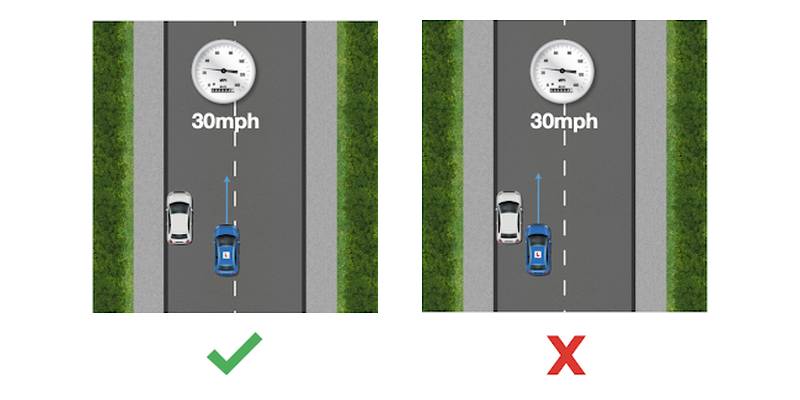
When passing parked cars, you should aim to leave at least the width of an open car door between your vehicle and the parked cars on a 30 mph road, and more space where possible on faster roads. As you approach, look out for people sitting inside vehicles, doors that could open and pedestrians who may step out from between parked cars.
There will be times when the width of the road or oncoming traffic means you can’t leave as much space. When this happens, remember the rule: Less Space = Less Pace. The less clearance you have, the slower you should travel, giving you more time to react if something changes.
The diagram below shows examples of safe and unsafe speed and clearance when passing parked cars on a 30 mph road.
Can Two Cars Pass Parked Cars at the Same Time?
When meeting oncoming traffic, there may be enough room for both vehicles to continue at the same time. You need to look ahead, judge the space available and be ready to adjust your speed or stop if necessary.
As shown in the diagram below, as the clearance between your car, the parked vehicles and the oncoming vehicle becomes tighter, your speed should reduce. The less space you have, the slower you should be travelling, giving you more time and control as you pass through the gap.
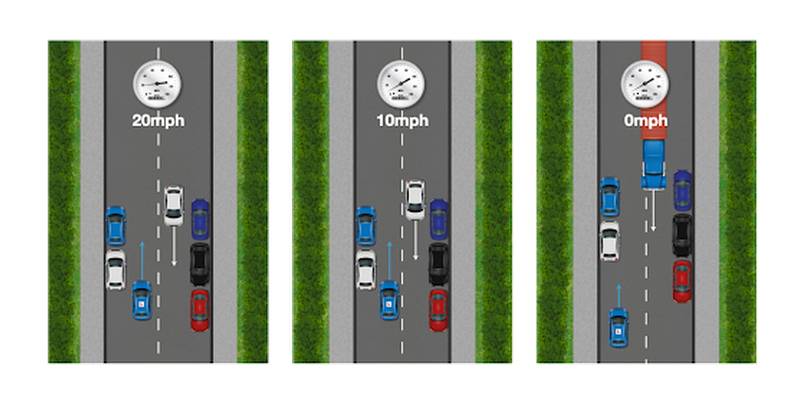
Having a parked car on your side of the road doesn’t always mean you need to stop. If there is enough room for you and the oncoming vehicle to pass safely, you can both continue, reducing your speed where necessary. If the gap isn’t wide enough for both vehicles, be prepared to stop in a suitable position and allow the oncoming vehicle through first.
What If Parked Cars Are on Both Sides?
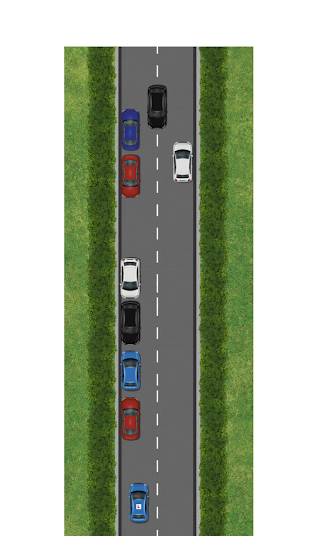
When there are parked cars on both sides of the road, look well ahead and try to work out where you and the oncoming vehicle are likely to meet. If the road gets particularly narrow, it’s often better to hold back somewhere with more space rather than continue towards the gap.
In the diagram, the safest option is to wait before the red parked car and let the oncoming black car come through. The gap between the red and white parked cars is very tight, so continuing could mean meeting the black car at the narrowest point and leaving very little room for either vehicle.
By holding back early, you give the other driver plenty of room to pass and avoid putting either of you in a difficult position. Once the black car has passed, you can continue when it’s safe.
What If You’re Already Committed?
If an oncoming vehicle appears once you’re already committed to passing parked cars, slow down early and be prepared to stop rather than forcing your way through. In some situations, one driver may need to reverse to a safe passing place.
How Far Ahead Should You Look When Passing Parked Cars?
Try to look as far ahead as you can and keep an eye out for anything that could develop into a hazard. The earlier you spot something, the more time you’ll have to decide what to do and avoid putting yourself in a situation where there isn’t enough room for two vehicles to pass.
Take extra care on bends, hills and dips, where your view of oncoming traffic may be restricted. For example, the road ahead might appear clear when you start passing a row of parked cars, only for an oncoming vehicle to appear as you travel around a bend. Ease off your speed, look ahead for suitable gaps and be prepared to stop if the situation changes.
Don’t worry if this doesn’t come naturally at first. As a learner, your forward planning and judgement will improve with practice. Before long, you may notice that your instructor says very little when you’re passing parked cars because they trust you to assess the situation and make the right decisions yourself.
Watch the video below to see Anthony Johnson, a Grade A driving instructor with a 51/51 score, teach a learner about meeting traffic, clearance and anticipation for the first time.
Common Driving Test Mistakes With Parked Cars
Passing parked cars may seem straightforward, but it requires you to judge your speed, road position and the actions of other road users at the same time. During a driving test, the examiner will want to see that you can plan ahead and deal with these situations safely.
Common mistakes include:
- Driving too close to parked vehicles
- Approaching too quickly
- Spotting oncoming traffic too late
- Stopping too late and blocking the gap
- Hesitating when there is enough room to proceed
- Forcing an oncoming vehicle to slow down or stop
- Staring at oncoming traffic and drifting towards parked cars
- Moving out or pulling back in without checking your mirrors
The best way to avoid these mistakes is to practise different situations with your instructor. Look well ahead, keep your speed under control and identify safe passing places early. With practice, judging clearance and meeting oncoming traffic will start to feel much more natural.
Frequently Asked Questions
Still have questions about passing parked cars? We asked some of our instructors to answer the most common questions learners have about dealing with parked vehicles safely on the road.
You do not usually need to indicate when passing a parked car, especially if your intended road position is clear. An unnecessary signal could confuse other road users into thinking you are turning.
However, you may signal if it would help someone understand what you are about to do, for example, if you have stopped behind a parked vehicle and could be mistaken for being parked yourself. Before moving out, check your mirrors and blind spot where necessary, then proceed only when it is safe.
Answered by Shazia Saddique, who offers driving lessons in Oxford.
Yes. Check your mirrors before slowing down, changing your road position or moving out to pass a parked car. This helps you understand what is happening behind you, including whether another vehicle or cyclist may be attempting to pass.
If you have stopped behind a parked vehicle, check your mirrors again before moving off and glance into your right blind spot where necessary. Only move out when you are satisfied it is safe.
Answered by Daren Chalk, who offers driving lessons in Swindon.
Yes. Passing too close to a parked car can result in a driving fault. It may be marked as a serious or dangerous fault if your position creates a significant risk, causes another road user to react or could lead to a collision.
Leave enough clearance for a door to open where possible. If the road is too narrow to leave your usual amount of space, reduce your speed and remember: Less Space = Less Pace.
Answered by Jack Spicer, who offers driving lessons in Eastbourne.
Yes, but only when it is necessary and safe. The Highway Code allows you to cross a solid white centre line to pass a stationary vehicle, which includes a parked car.
Before crossing the line, make sure you have a clear view of approaching traffic and enough space to complete the manoeuvre safely. Cross only as far as necessary and wait if there is any doubt.
Answered by Chris Mason, who offers driving lessons in Milton Keynes.
Reduce your speed and be prepared to stop. Avoid swerving suddenly, as this could put you in the path of oncoming traffic or another road user. Check your mirrors before changing position and only move around the open door if there is enough space and it is safe.
Looking inside parked vehicles and leaving suitable clearance can help you anticipate a door opening before it becomes an immediate hazard.
Answered by Ankur Singh, who offers driving lessons in Watford.
The Highway Code advises that drivers should only flash their headlights to make others aware of their presence. They should not be used to communicate any other message, as flashing your headlights could land you in trouble. You should never assume that a flash means the road is clear or that it is automatically safe to proceed.
If another driver flashes you while you’re waiting to pass parked cars, make your own assessment. Check your mirrors, look for other road users and make sure there are no obstructions or hidden hazards. If the other vehicle is stationary and you are satisfied that it is safe, you may proceed carefully. If you are unsure, wait.
Answered by Christian-Jim Matthews, who offers driving lessons in Aylesbury.
Passing Parked Cars Safely: Key Takeaways
Passing parked cars safely comes down to looking well ahead, judging the available space and adjusting your speed early. Leave suitable clearance, be prepared to give way and never assume that another driver will stop. If space is limited, slow down and give yourself more time to react.
At driveJohnson’s, our instructors will give you plenty of opportunities to practise these skills, helping them feel more natural with every lesson. Contact us if you’re ready to start lessons or would simply like more information. A member of our office team will get back to you as soon as possible.